SHIFT
Overview
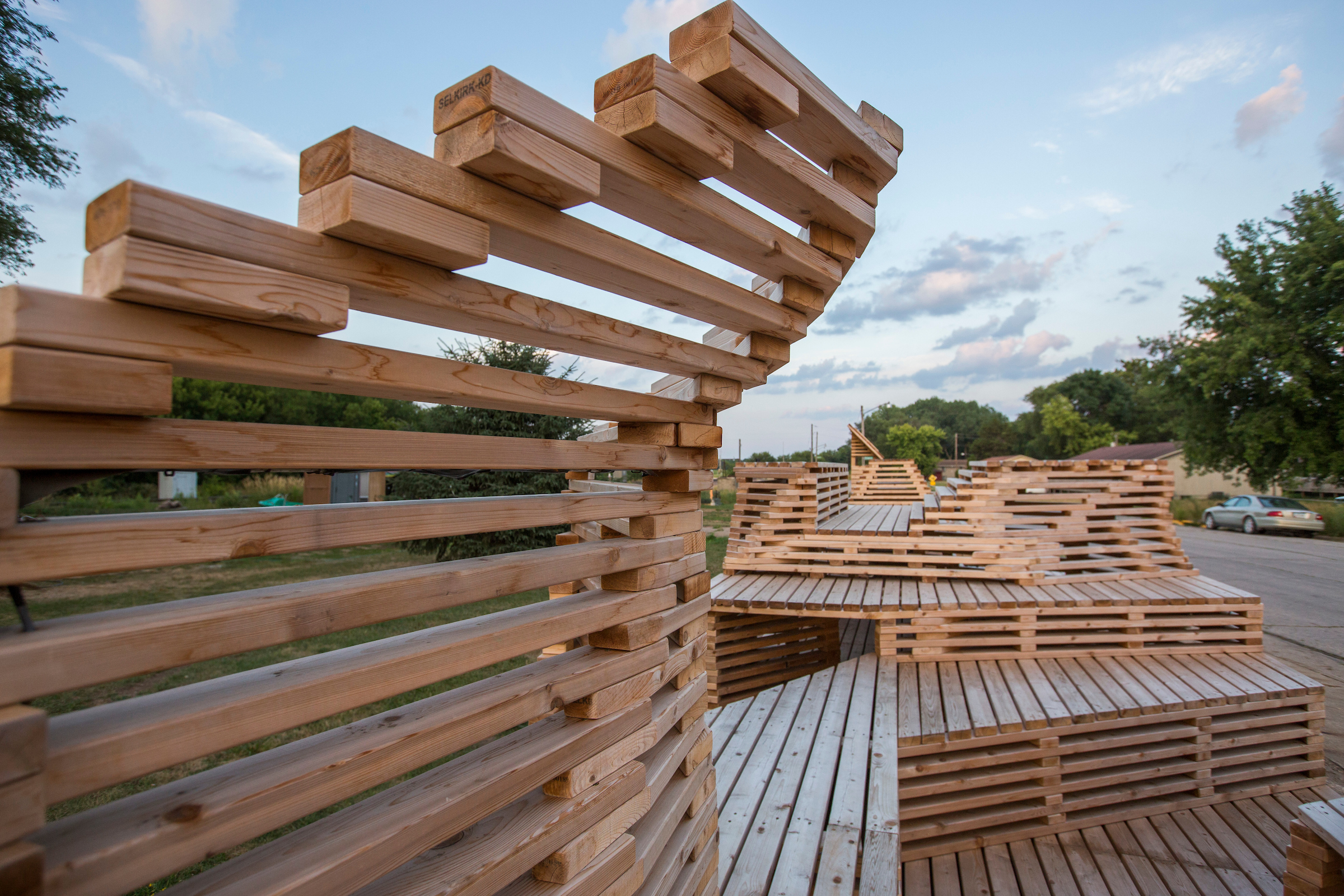
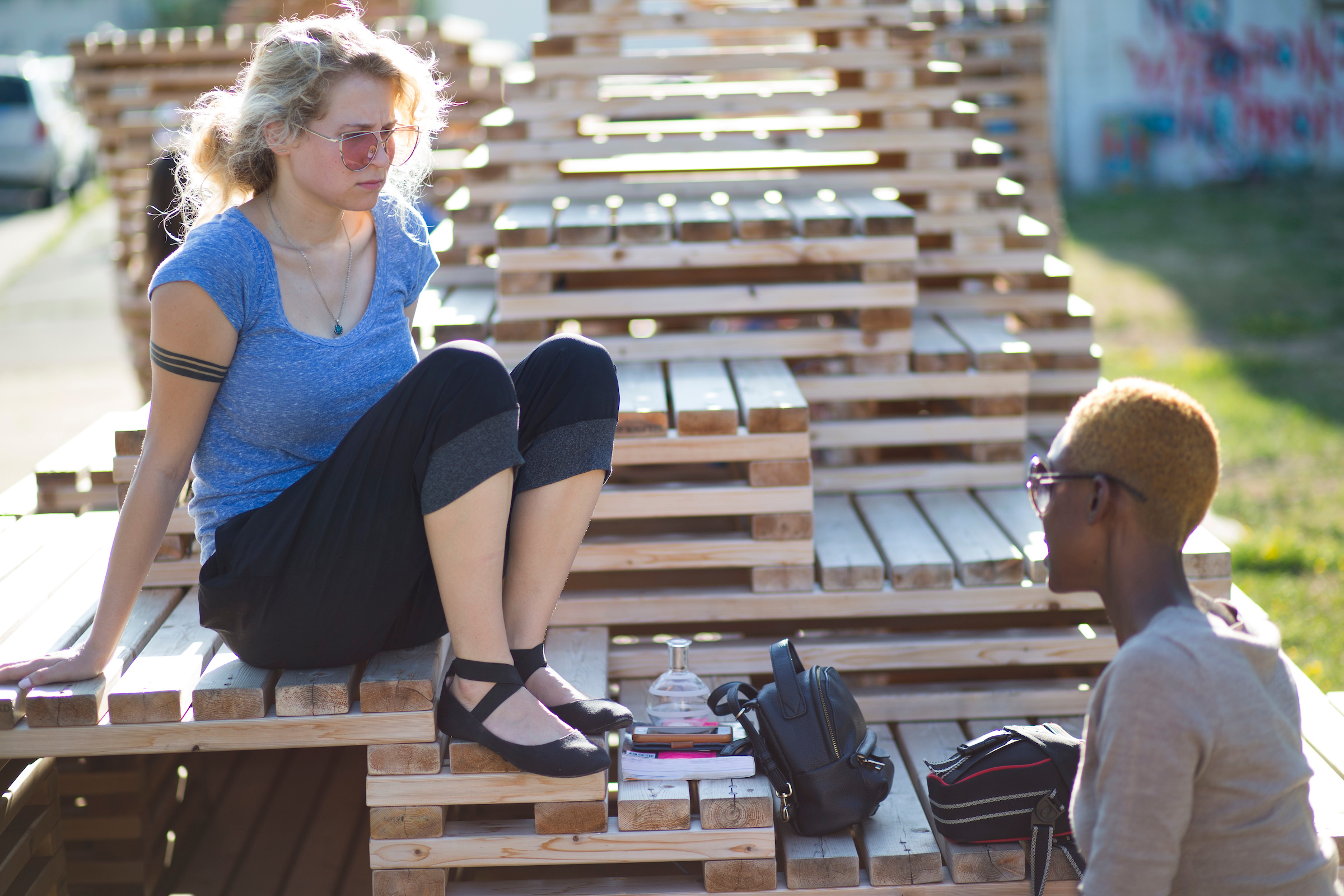
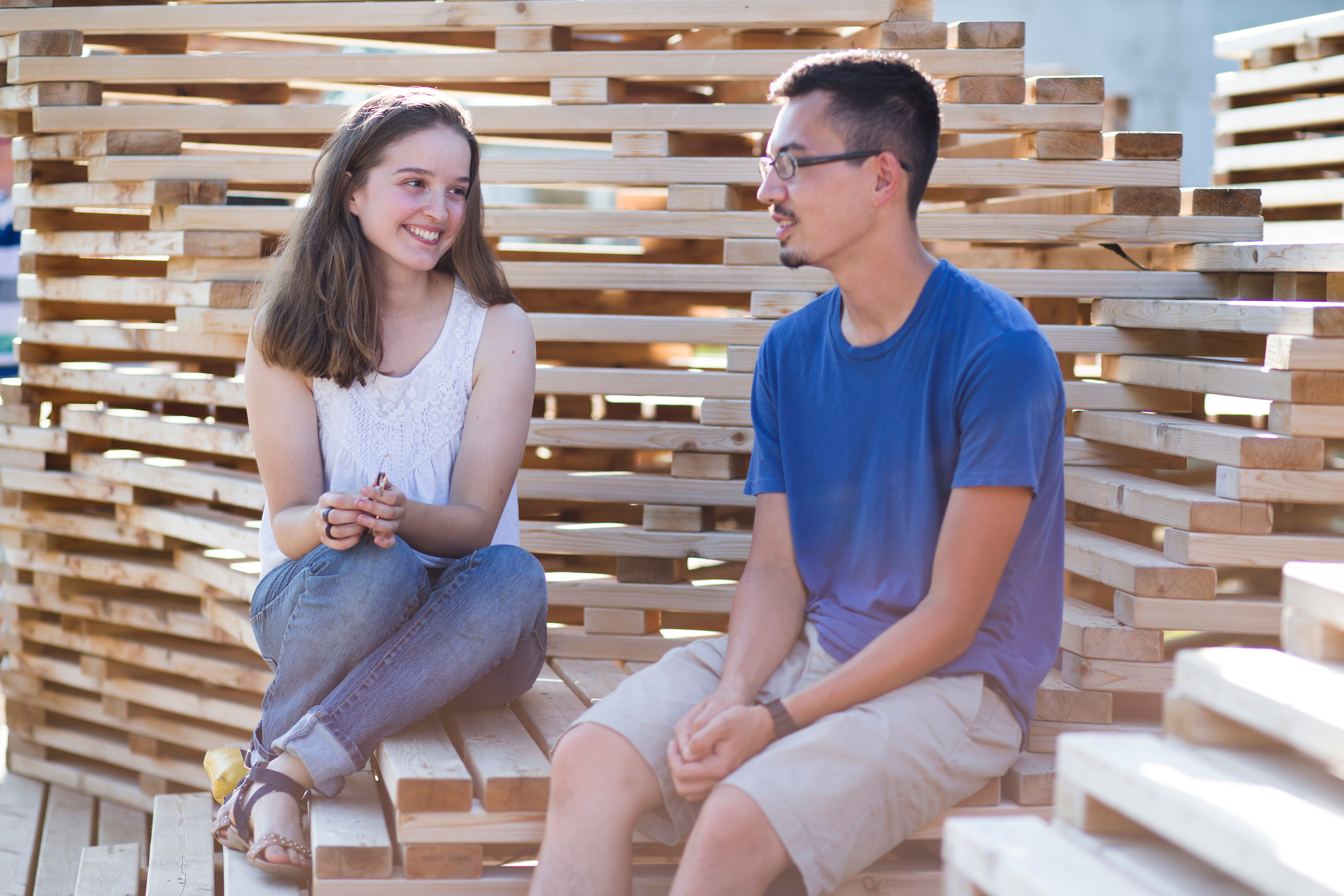
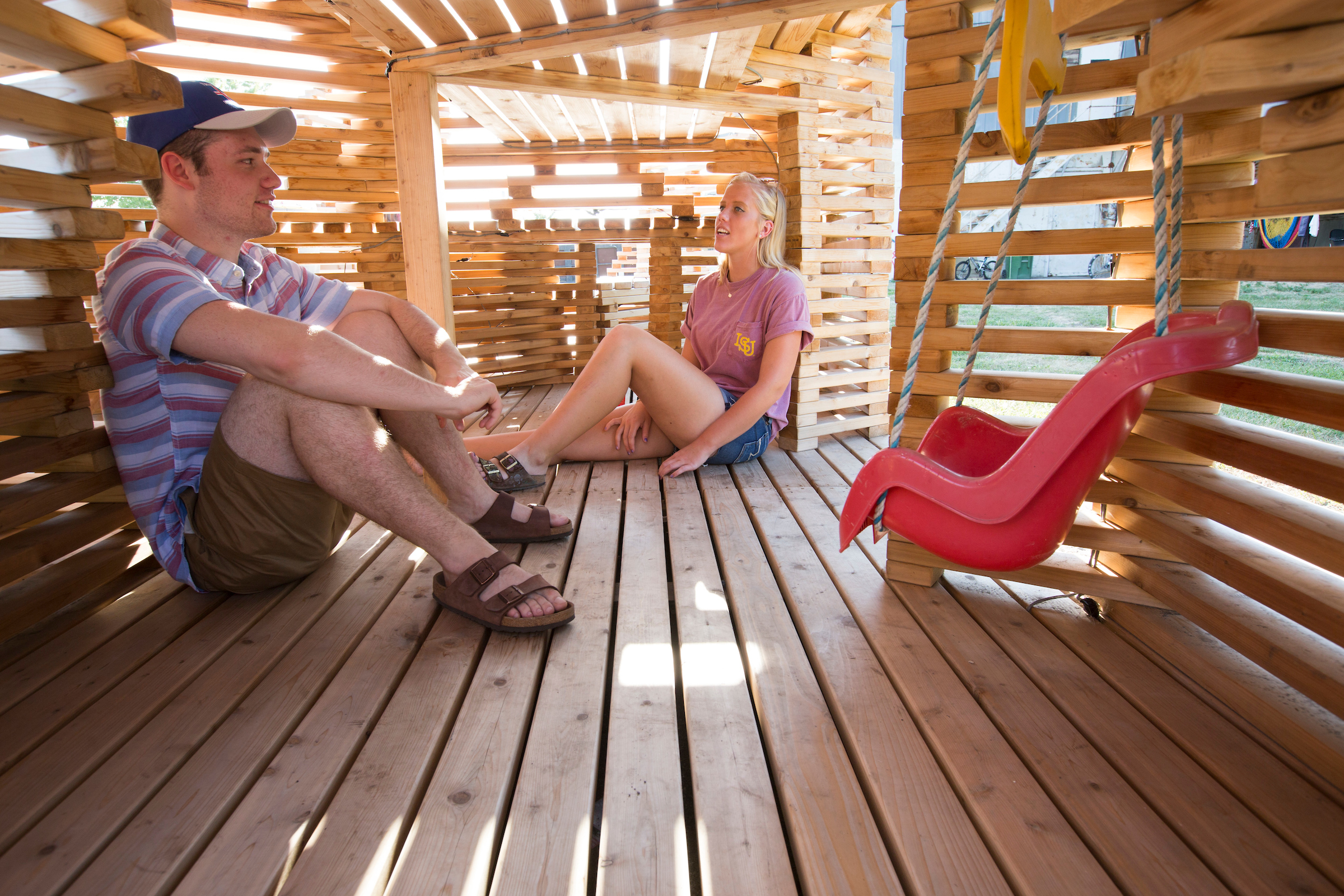
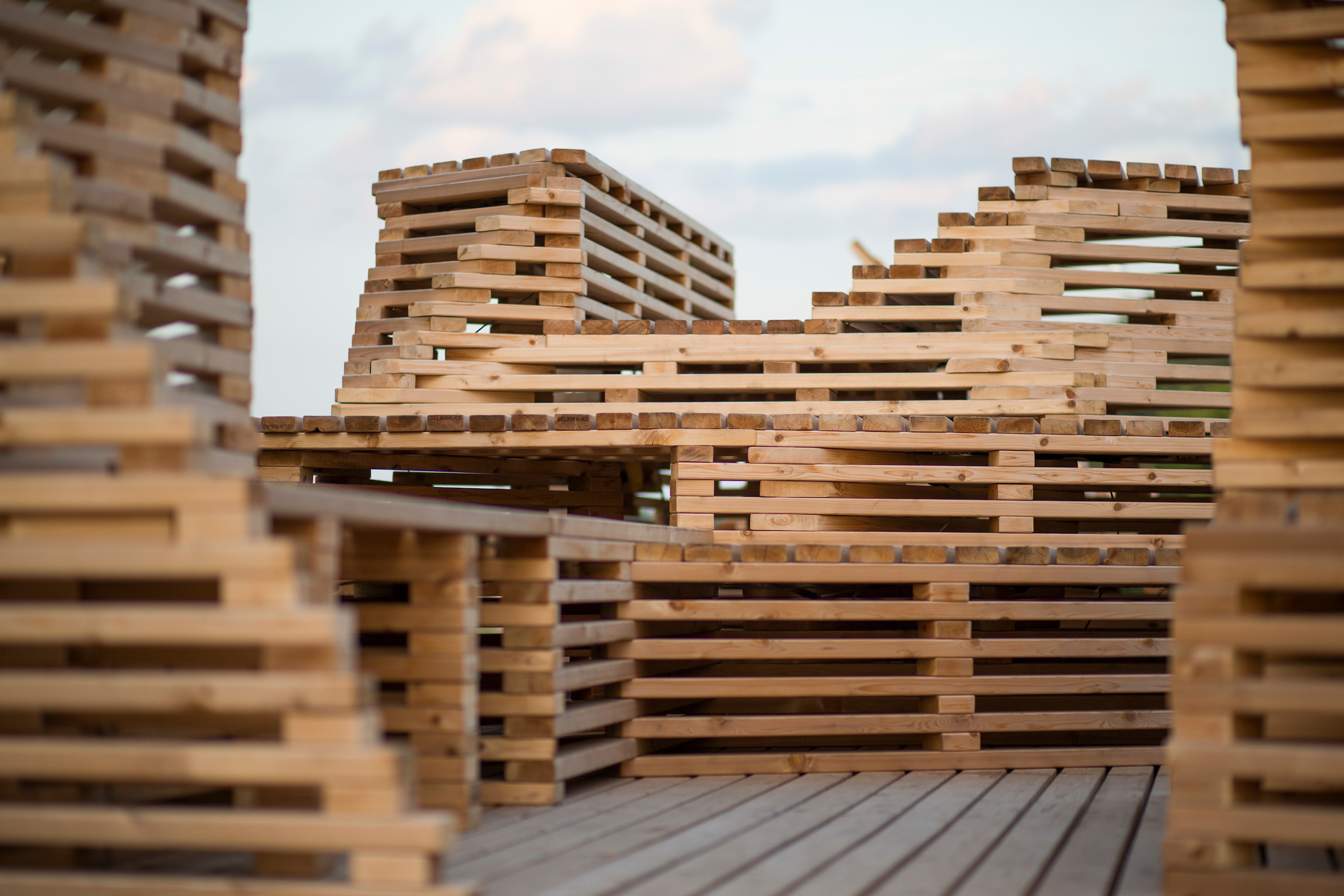
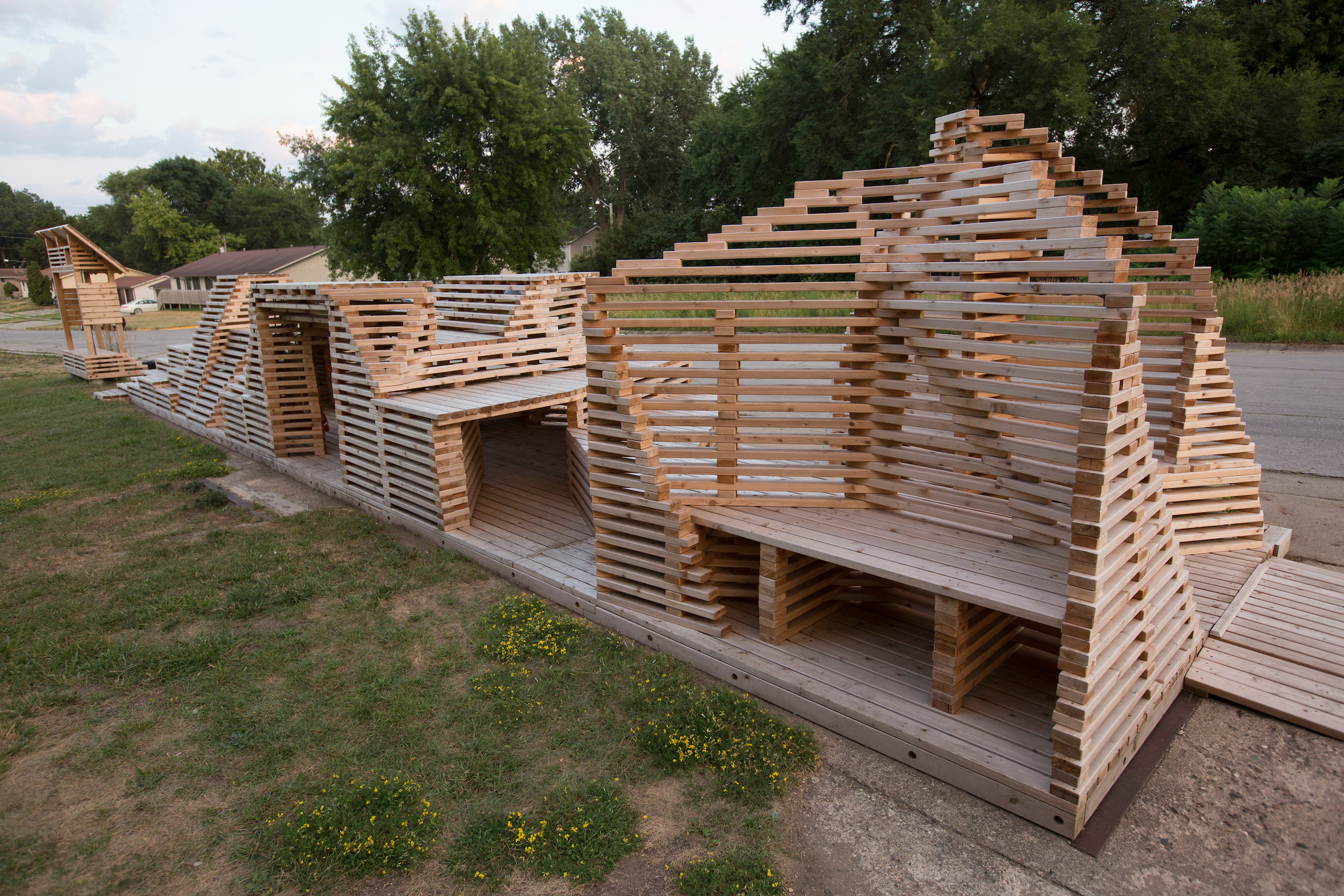
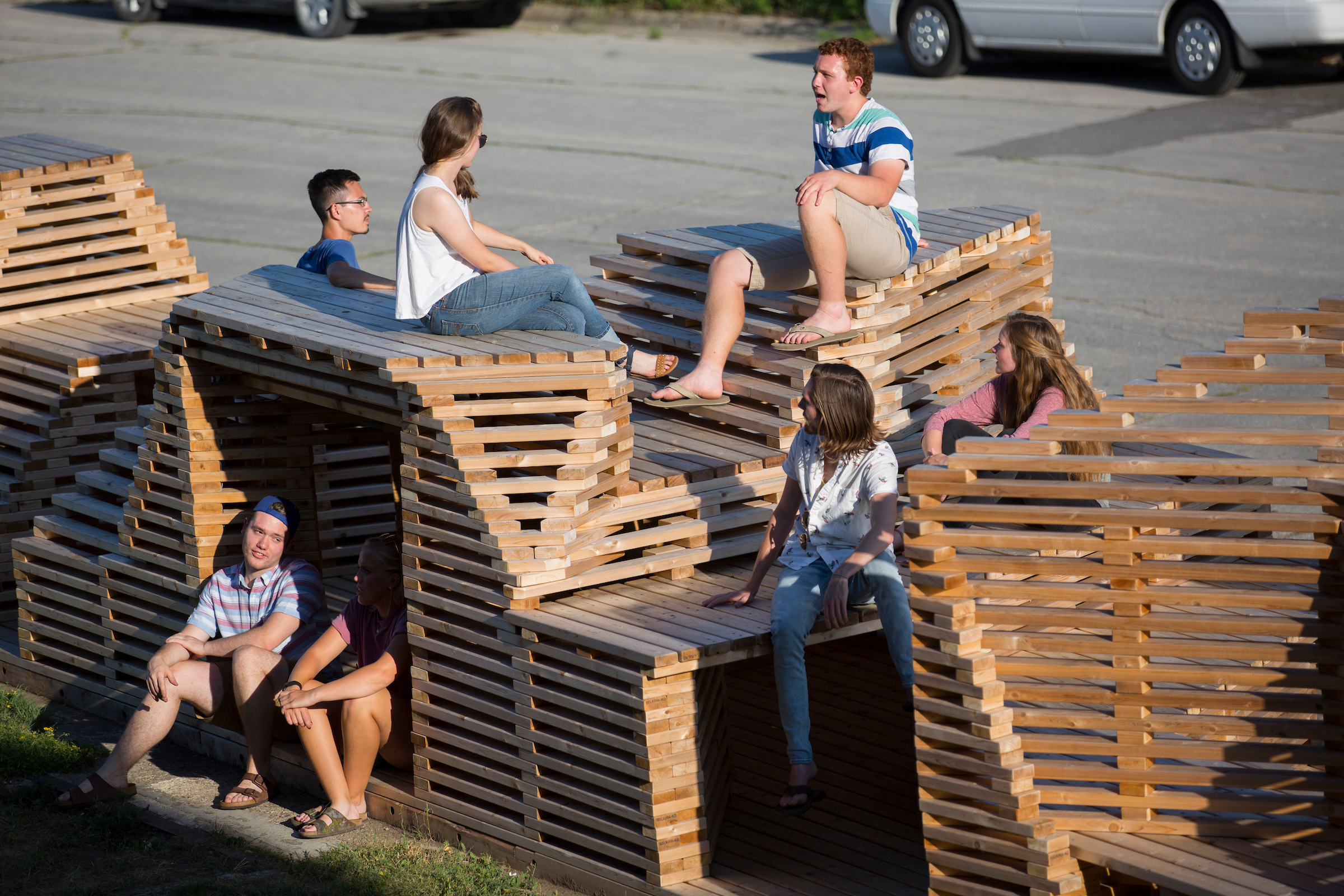
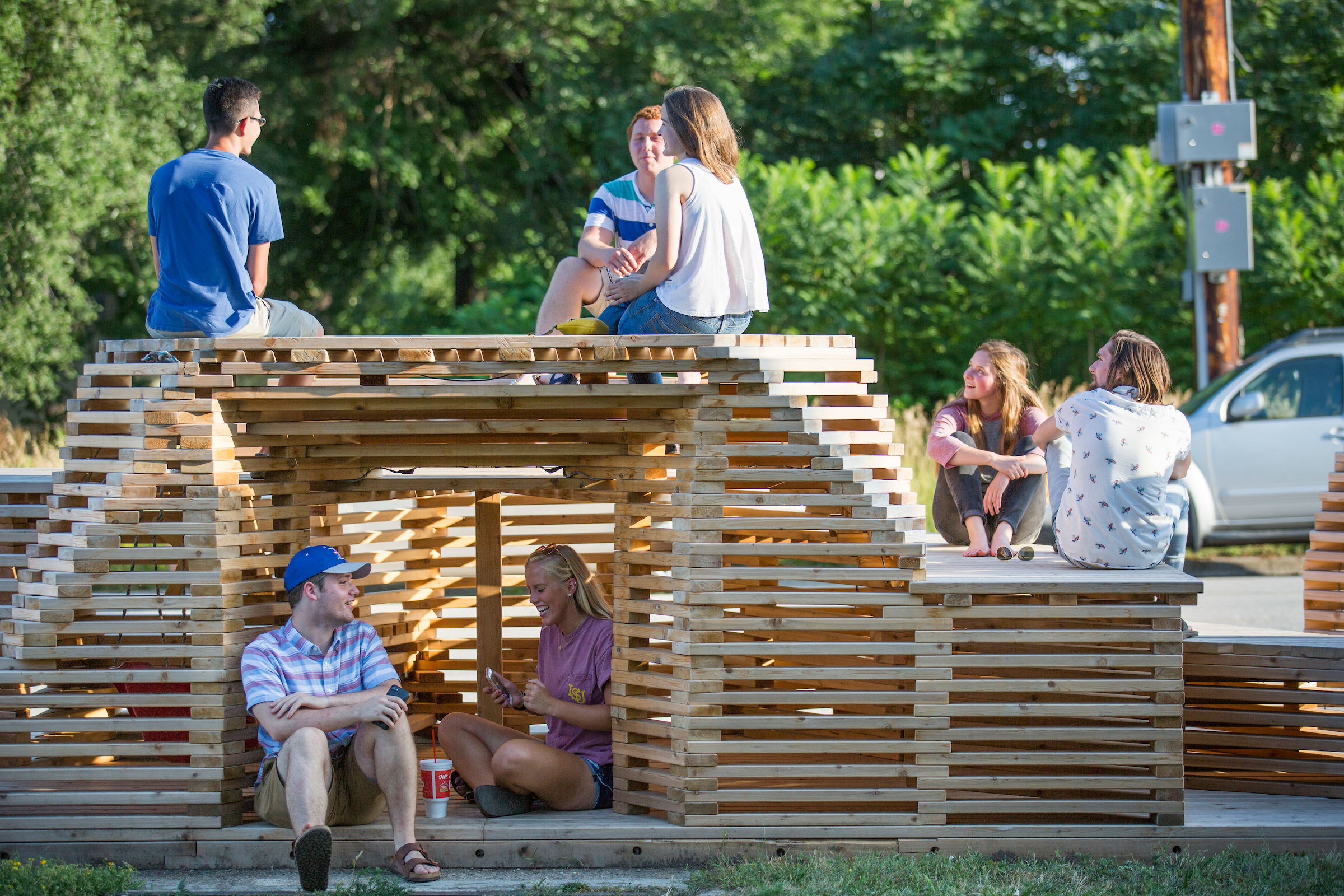
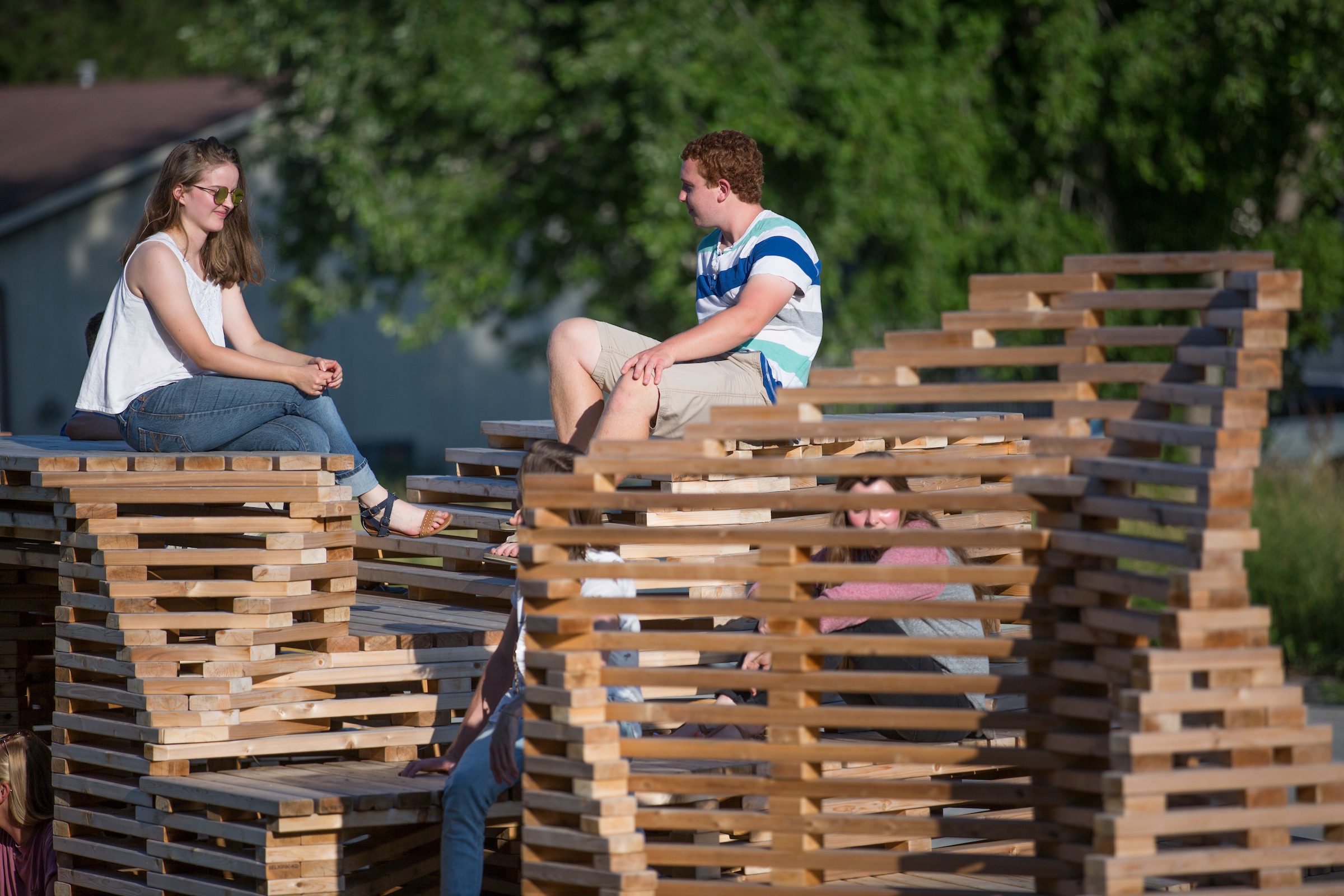
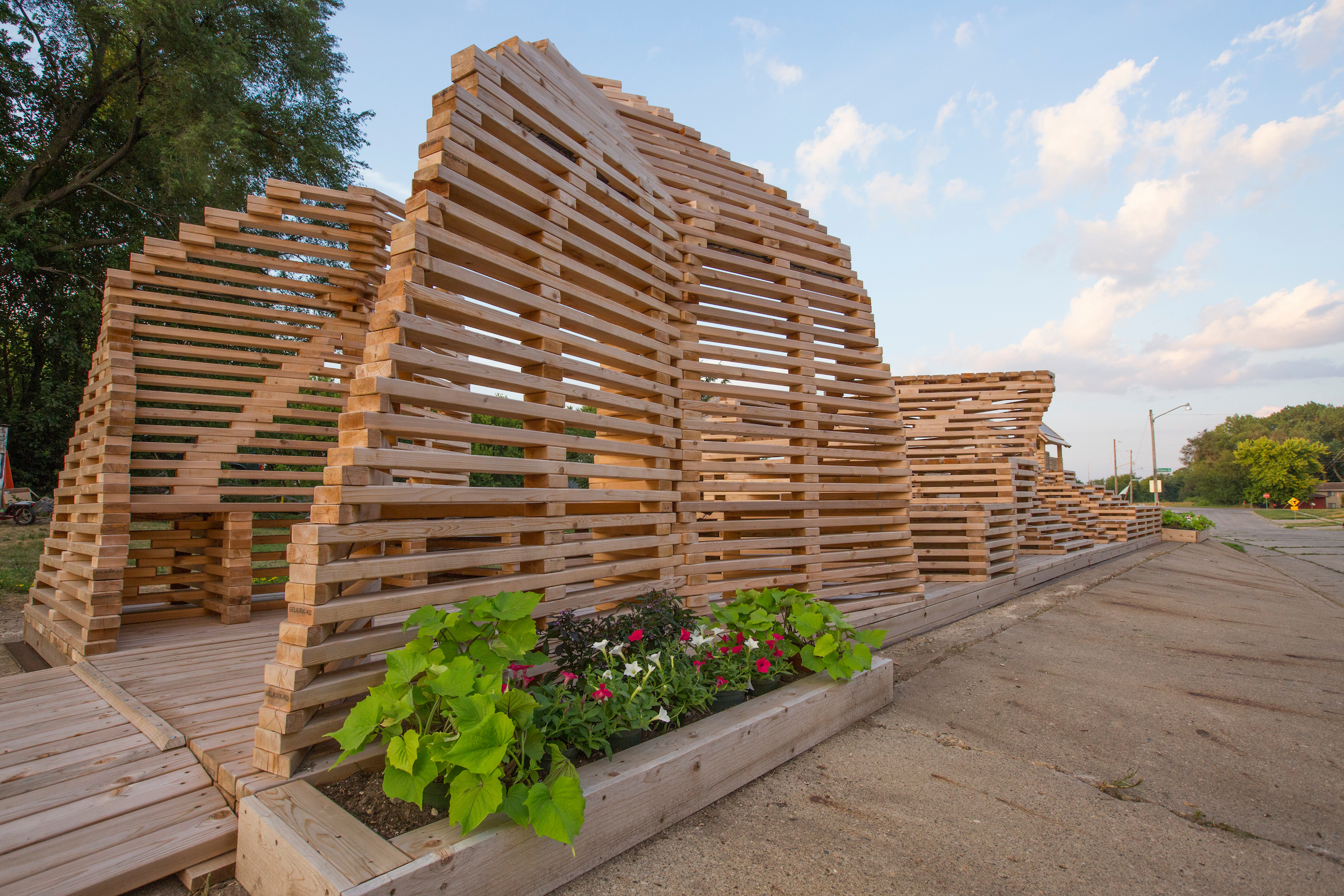
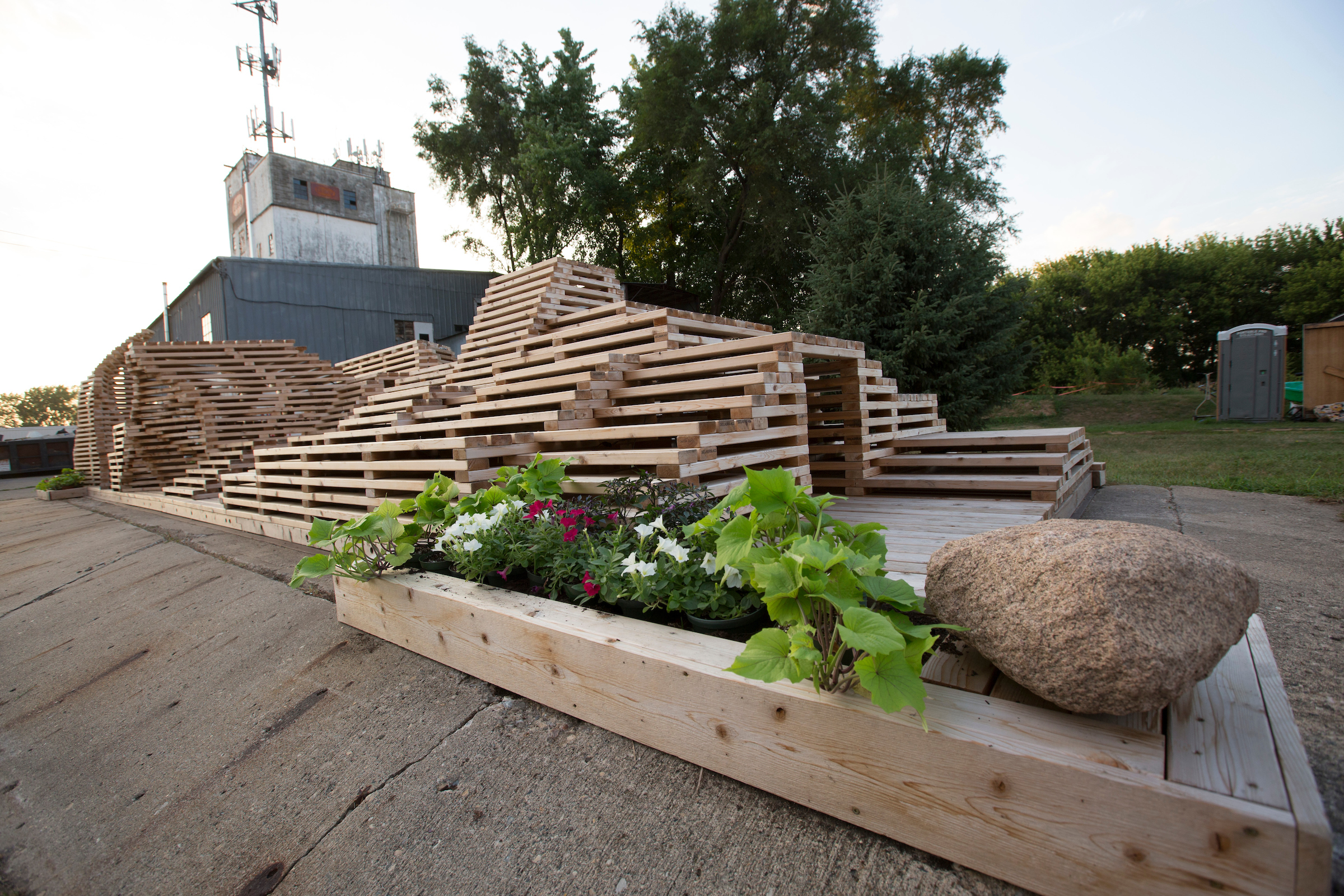
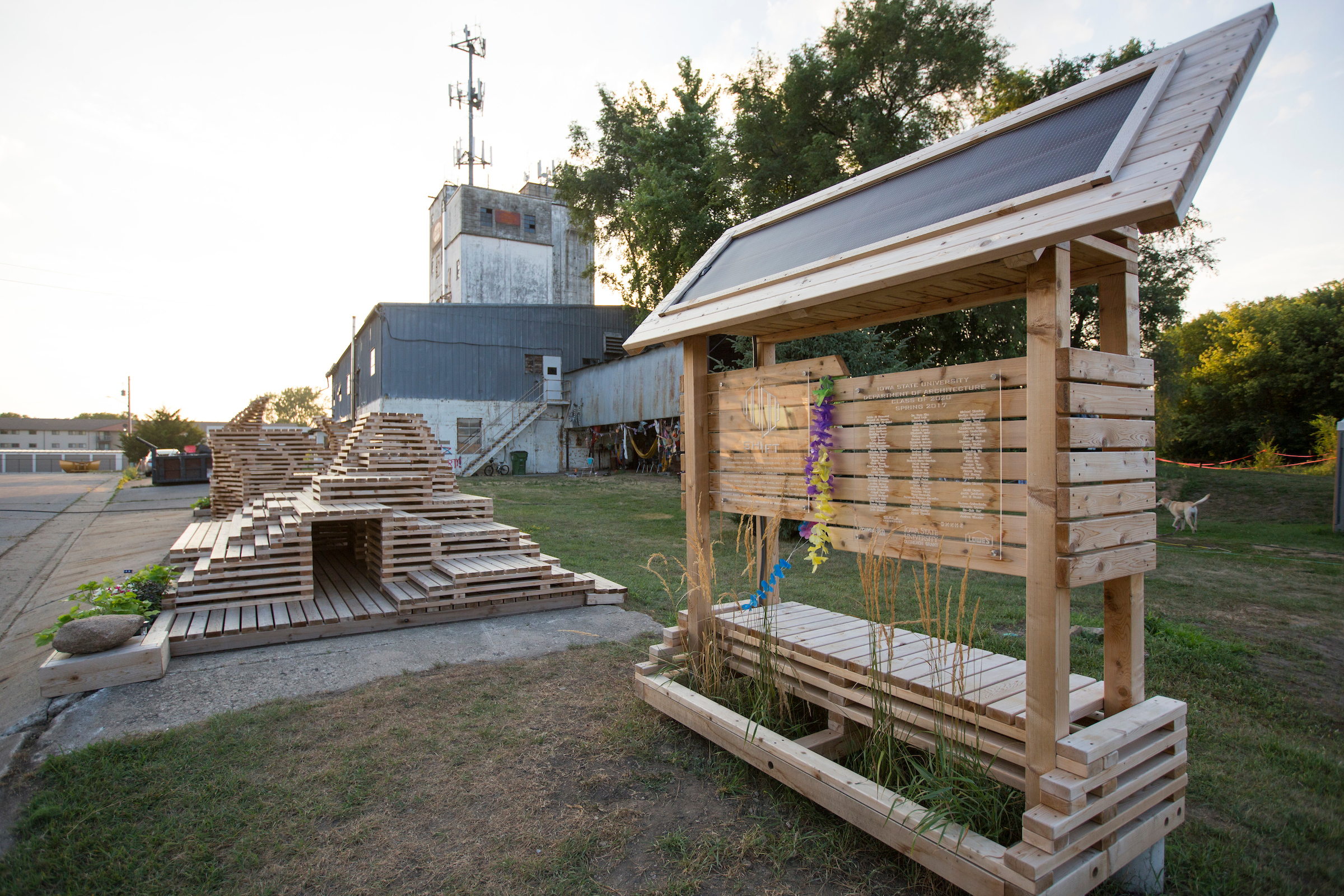
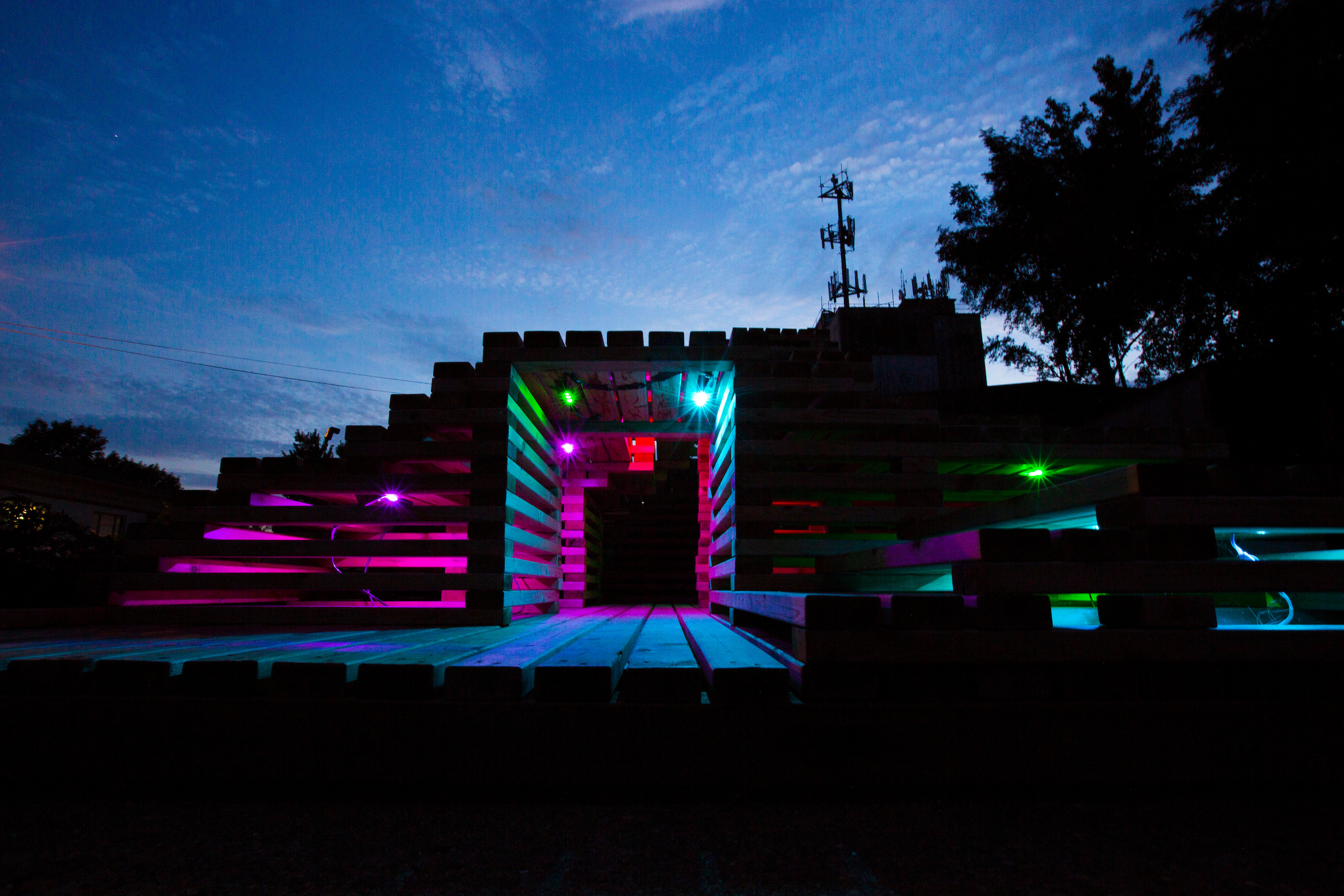
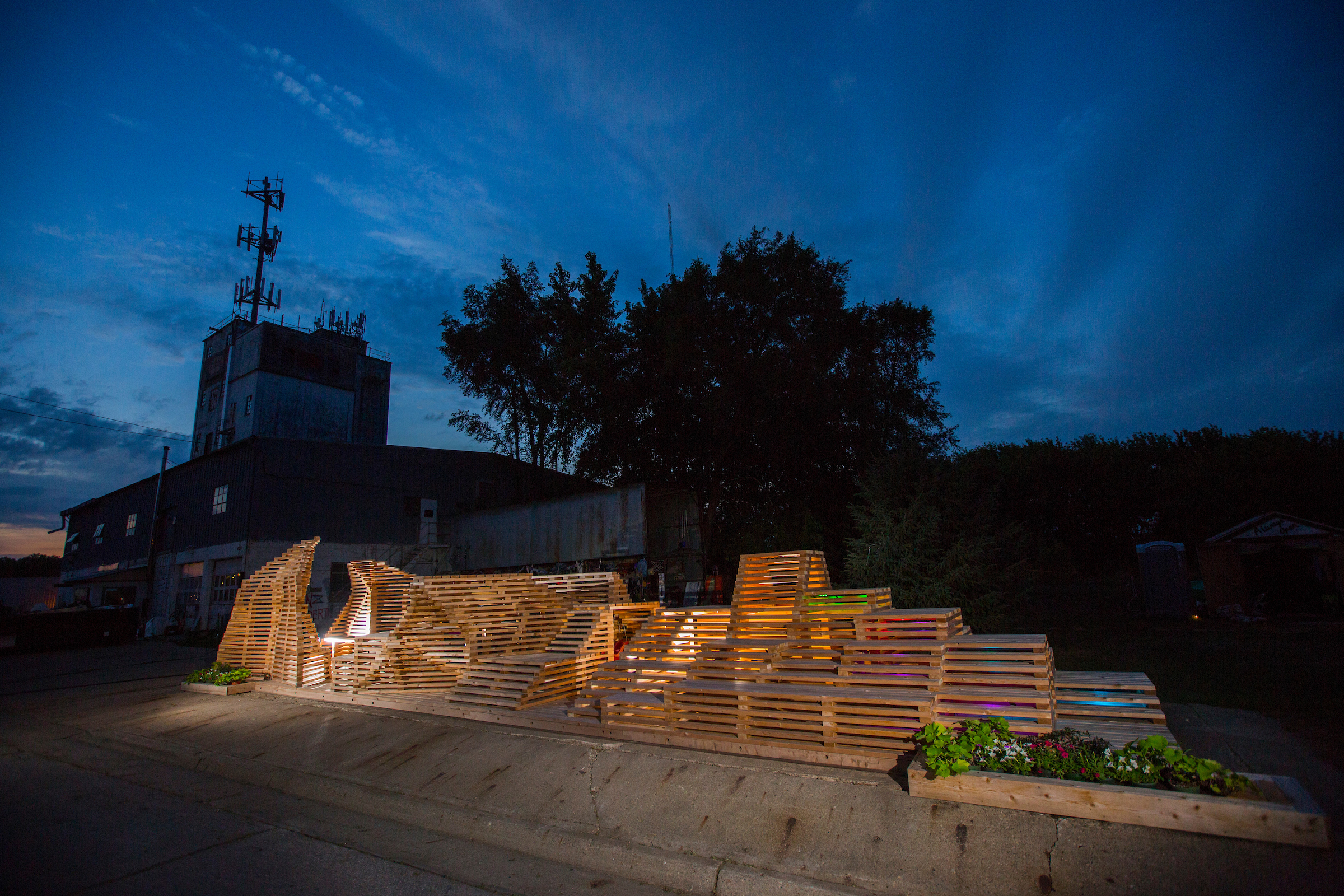
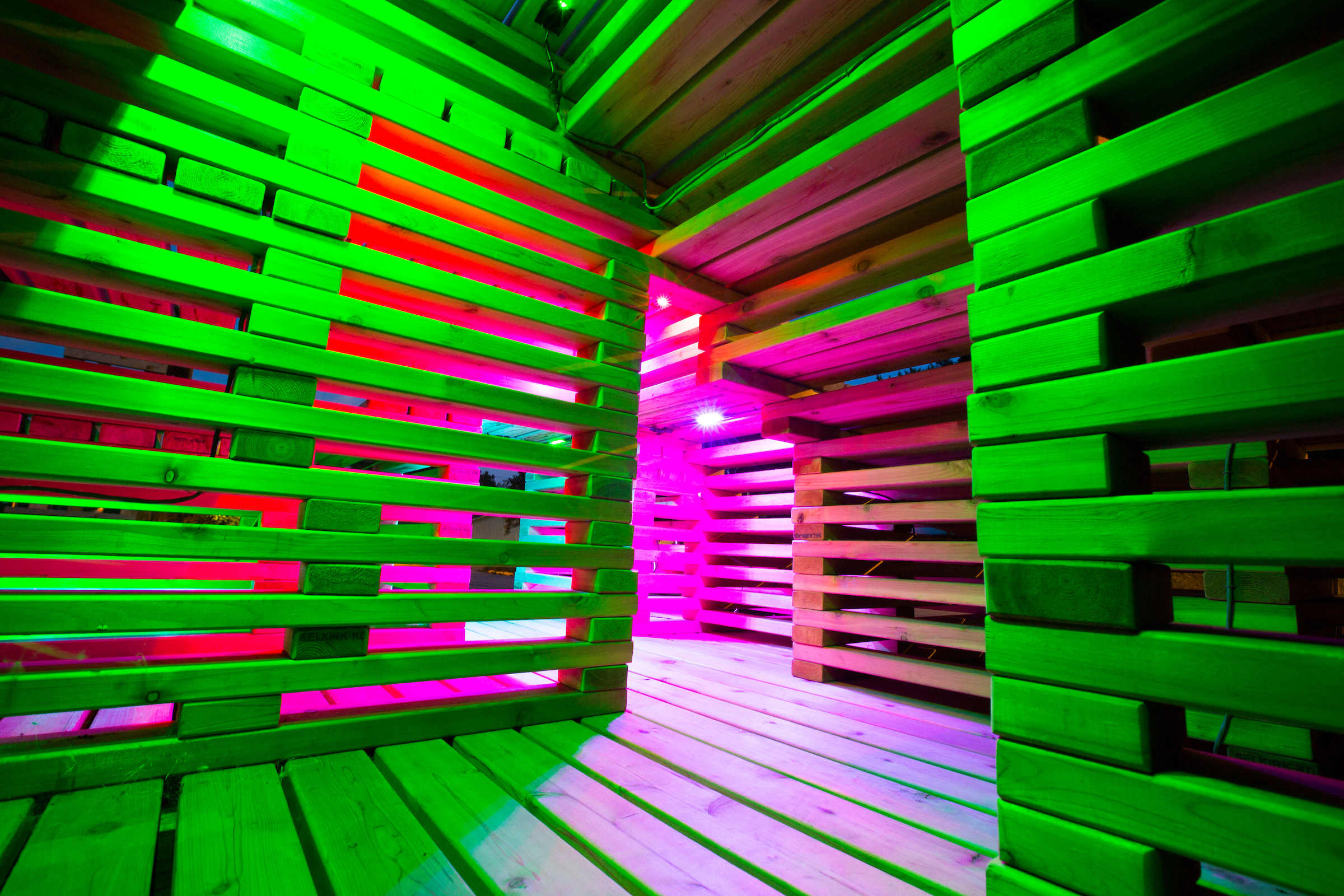
SHIFT is a large-scale design-build installation created in 2017 by 86 second-year architecture students and faculty at Iowa State University. Located on campus, the cedar structure features layered horizontal elements that invite sitting, climbing, and exploration. Designed for interaction, SHIFT engages users with material, light, and space—transforming throughout the day and into the evening through solar-powered LED illumination. The project reflects a collaborative, hands-on approach to architectural education, supported by Reliable St. and a 2017 Fieldstead Studio Outreach Grant.
Details
Title: “SHIFT”
Location: Ames, Iowa
Client: Reliable Street
Completed: April 2017
Size: 10ft x 10ft x 40ft
Medium: Nominal Lumber, LED, Solar Panels
Credits: Iowa State University – ARCH 202 | Class Spring 2017
Faculty: Roman Chikerinets, Reinaldo Correa, Bosuk Hur, Nick Senske & Andrea Wheeler
Project Narrative
SHIFT emerged in 2017 as a full-scale design-build project developed by second-year architecture students at Iowa State University, facilitated through an intensive, faculty-led studio. As an instructor and co-lead of the initiative, I collaborated closely with fellow professors to guide students through the conception, detailing, and construction of a site-specific installation that challenged traditional boundaries between play, structure, and spatial learning.
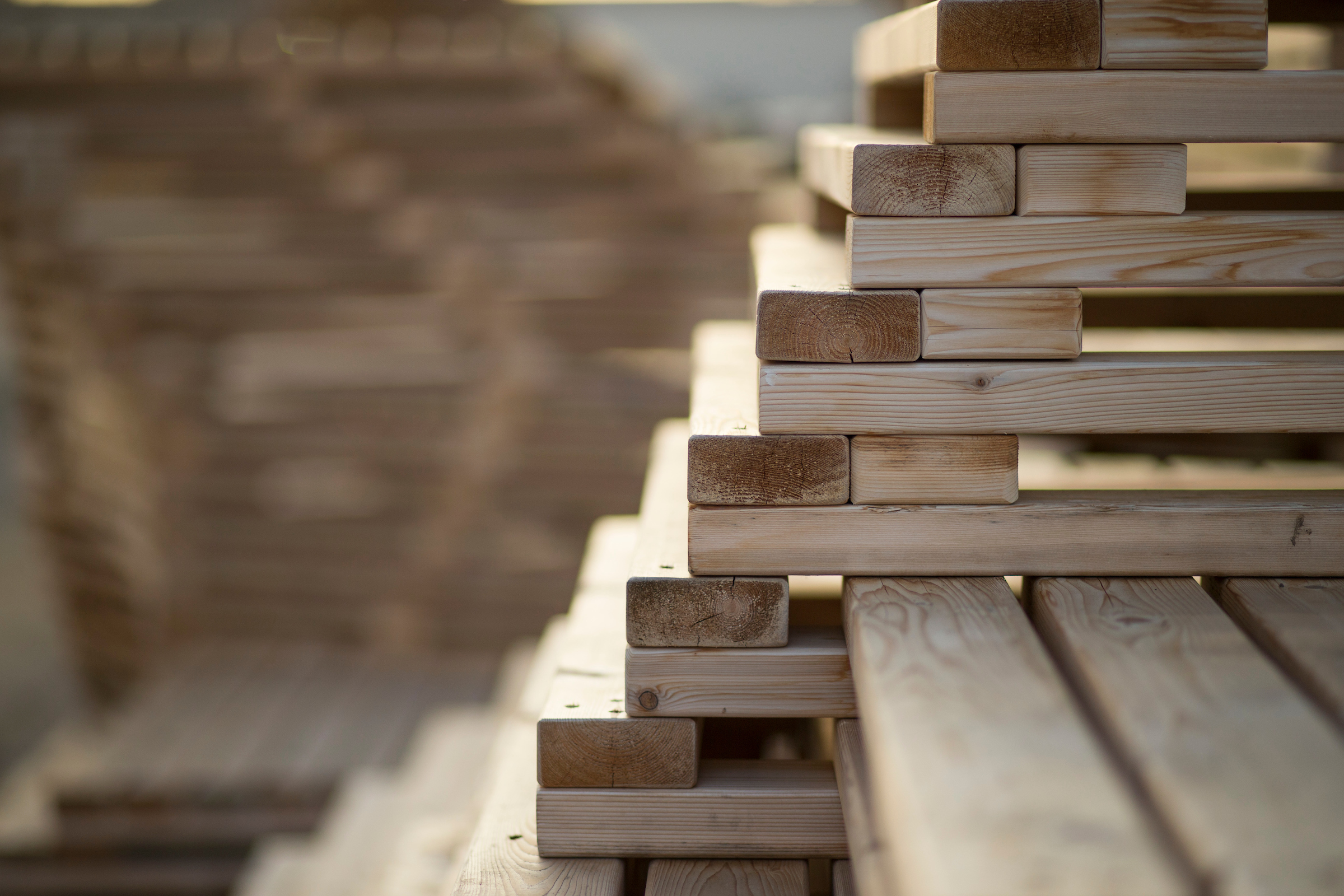
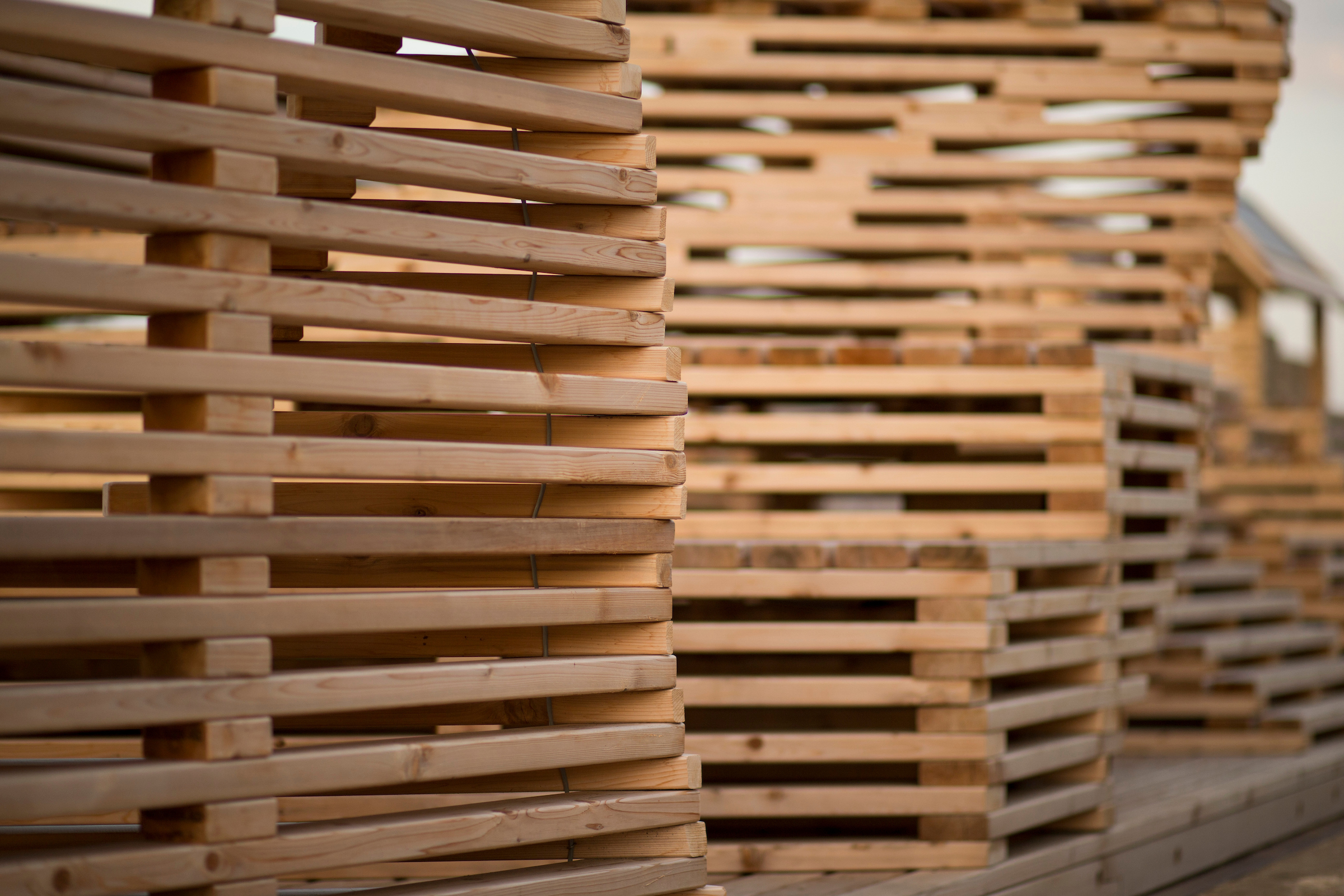
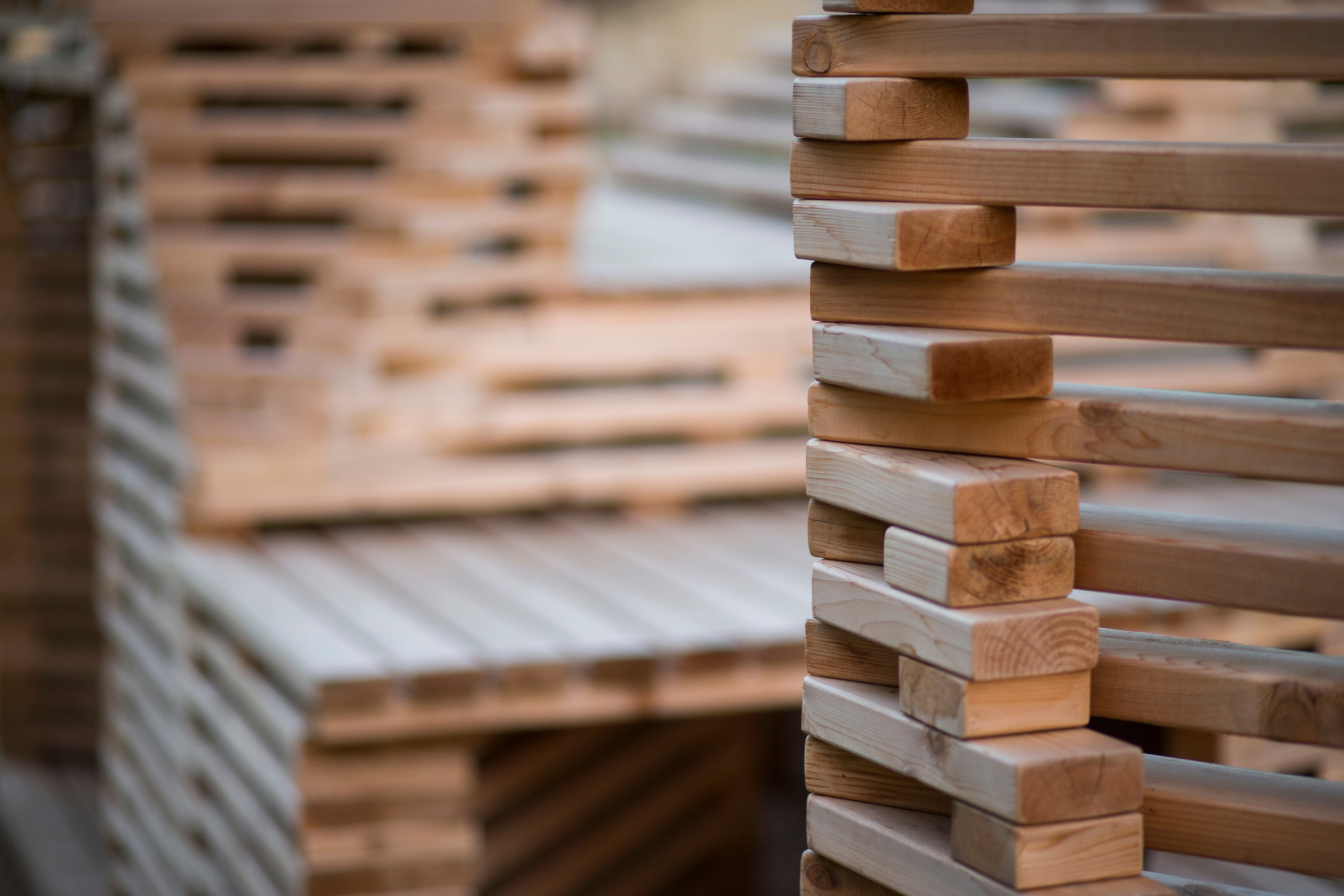
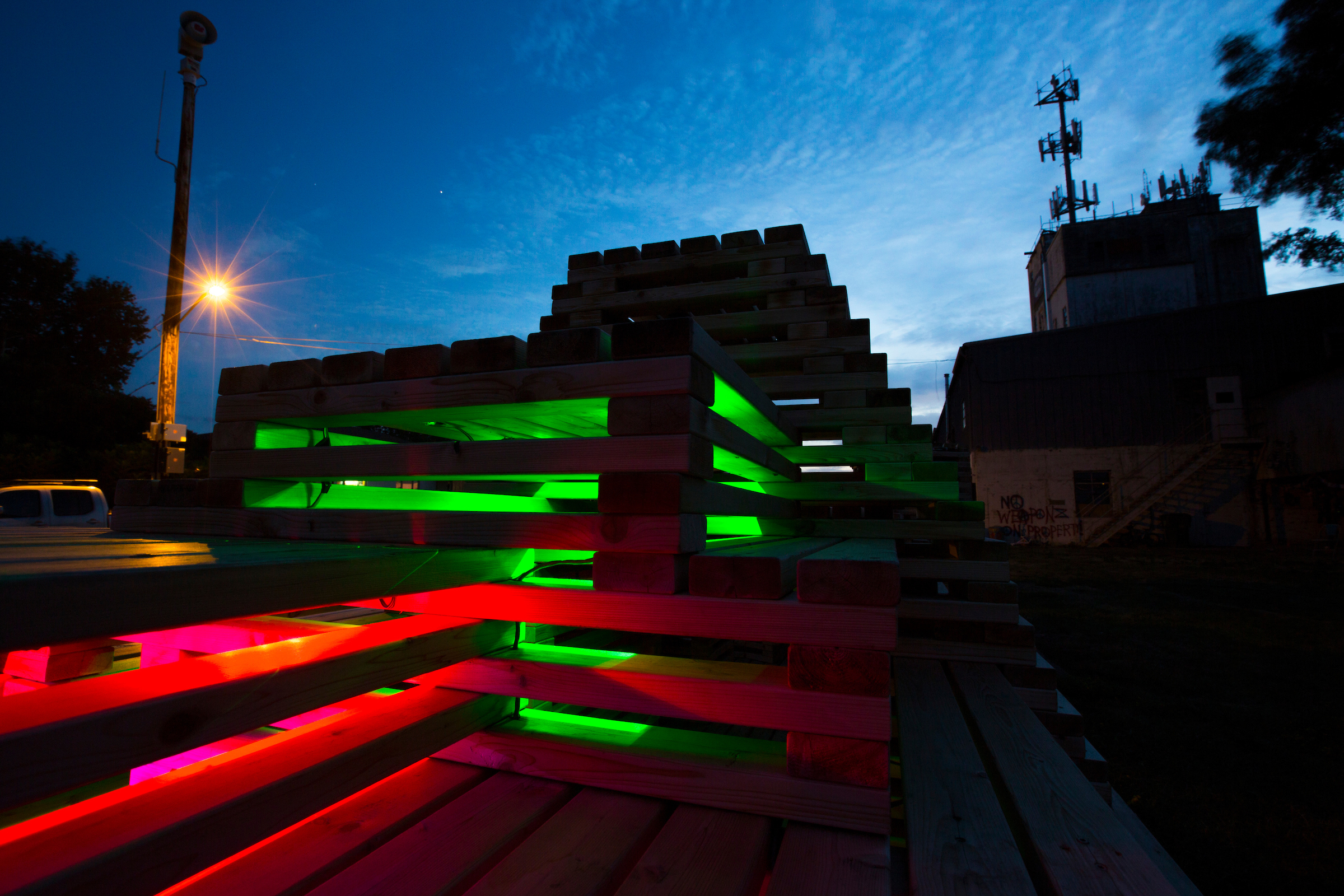
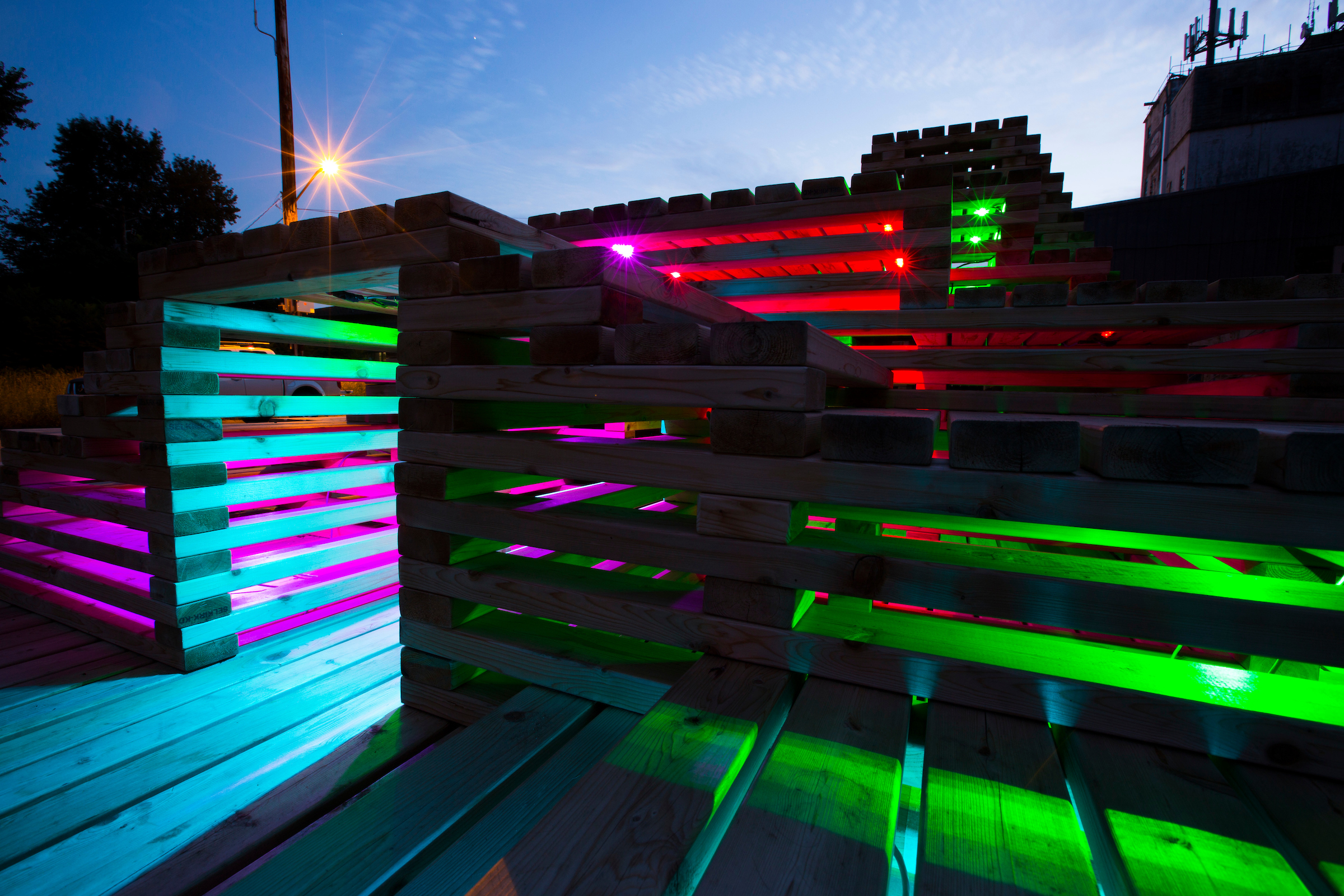
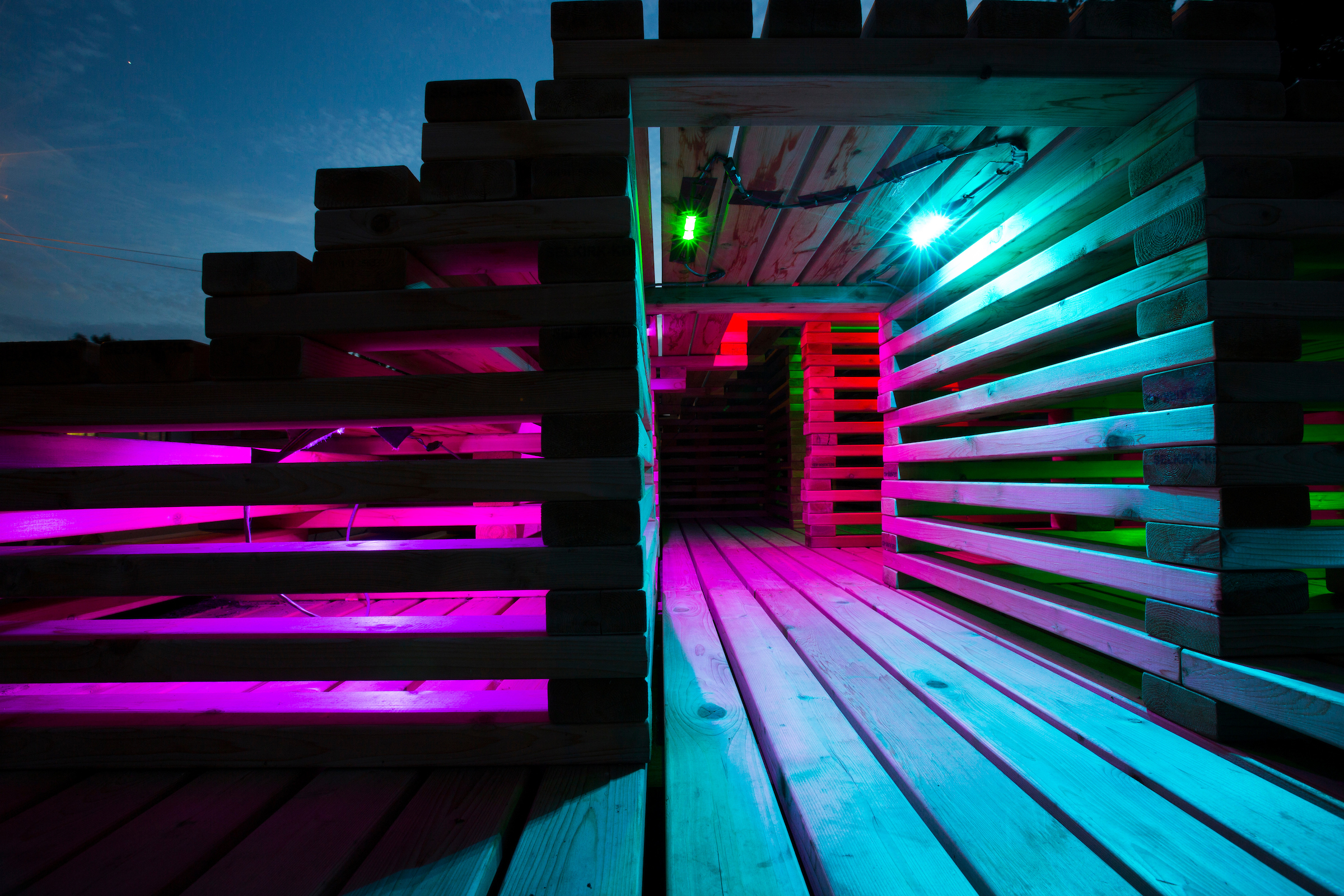
Constructed entirely from cedar lumber and deck screws, SHIFT engages the body and senses in a multiscalar dialogue between user and form. The structure’s linear wooden components are repetitively assembled in horizontal sequences, generating varied thresholds for sitting, crawling, standing, climbing, and pausing. The resulting experience invites playfulness while simultaneously exposing students to the tectonic rigor and decision-making involved in full-scale construction.
From the outset, the pedagogical intent of SHIFT was to immerse students in a process that foregrounded material literacy, team-based coordination, and the translation of abstract spatial ideas into built form. Rather than treating construction as a post-design phase, the project collapsed distinctions between drawing and making. The build process became a space for negotiation—between concept and site, material constraint and design ambition, individual authorship and collective responsibility.
Environmental considerations also played a central role. The structure is illuminated at night using solar-powered LED lights donated by PowerFilm, a local Ames-based technology company. This integration of renewable energy provided students with firsthand exposure to sustainable design solutions, while also activating the space beyond daylight hours. The illuminated structure becomes a quiet beacon on campus—transforming from a playful form during the day into a contemplative, glowing landmark at night.
SHIFT was supported through funding from Reliable St. and a 2017 Fieldstead Studio Outreach Grant. These partnerships emphasized our commitment not only to hands-on learning but also to community connectivity and external collaboration. Funding support enabled students to work with real-world constraints while engaging with partners beyond the academic context—strengthening their understanding of architecture as a civic and social act.
As faculty, our role was not simply to supervise construction, but to foster an environment of critical inquiry, care, and experimentation. Every joint, angle, and spacing decision became an opportunity for reflection and revision. Students were encouraged to think through their hands, to embrace the iterative process of building, and to understand that architectural knowledge is shaped not only in models or renderings but also on site—through labor, light, weather, and material resistance.
SHIFT remains a testament to the power of design-build education. It reflects our belief that architecture is best taught when students are immersed in the messy, beautiful, and complex realities of making. It is in these moments—when tools are in hand, and the stakes are real—that students begin to understand not just how architecture looks, but how it feels, how it performs, and how it connects people and place.