A View From The Porch, Lost Creek Settlement
Overview
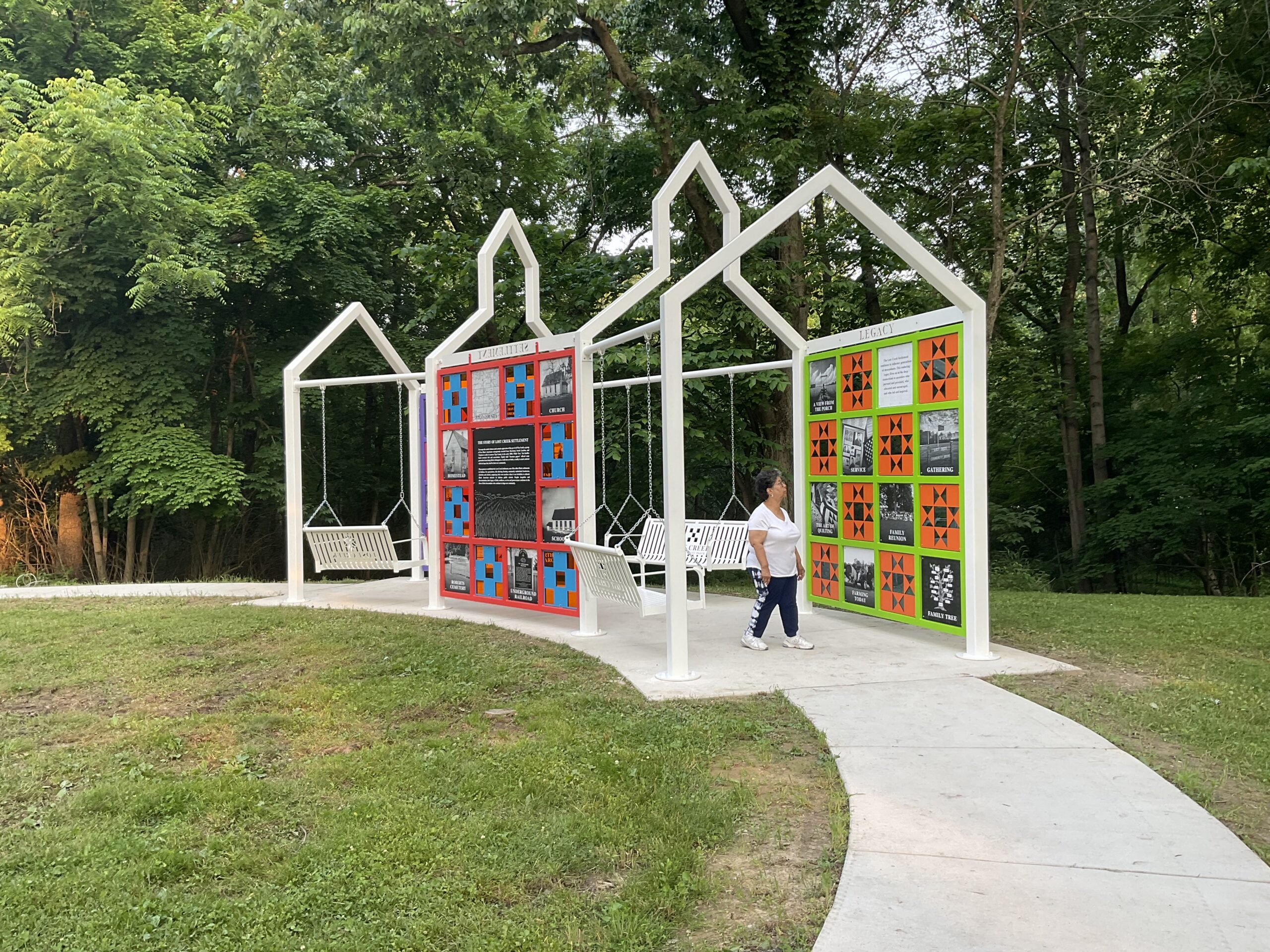
A View from the Porch is a sculptural installation that honors the powerful legacy of the Lost Creek Settlement—one of Indiana’s earliest Black communities, established by free African Americans who migrated from Maryland, North Carolina, and Virginia in the early 1800s. These pioneers, many holding fragile freedom papers, sought refuge from the racial violence and systemic oppression of the pre–Civil War South. Though legally free, they lived with constant risk, building a new future with courage and conviction.
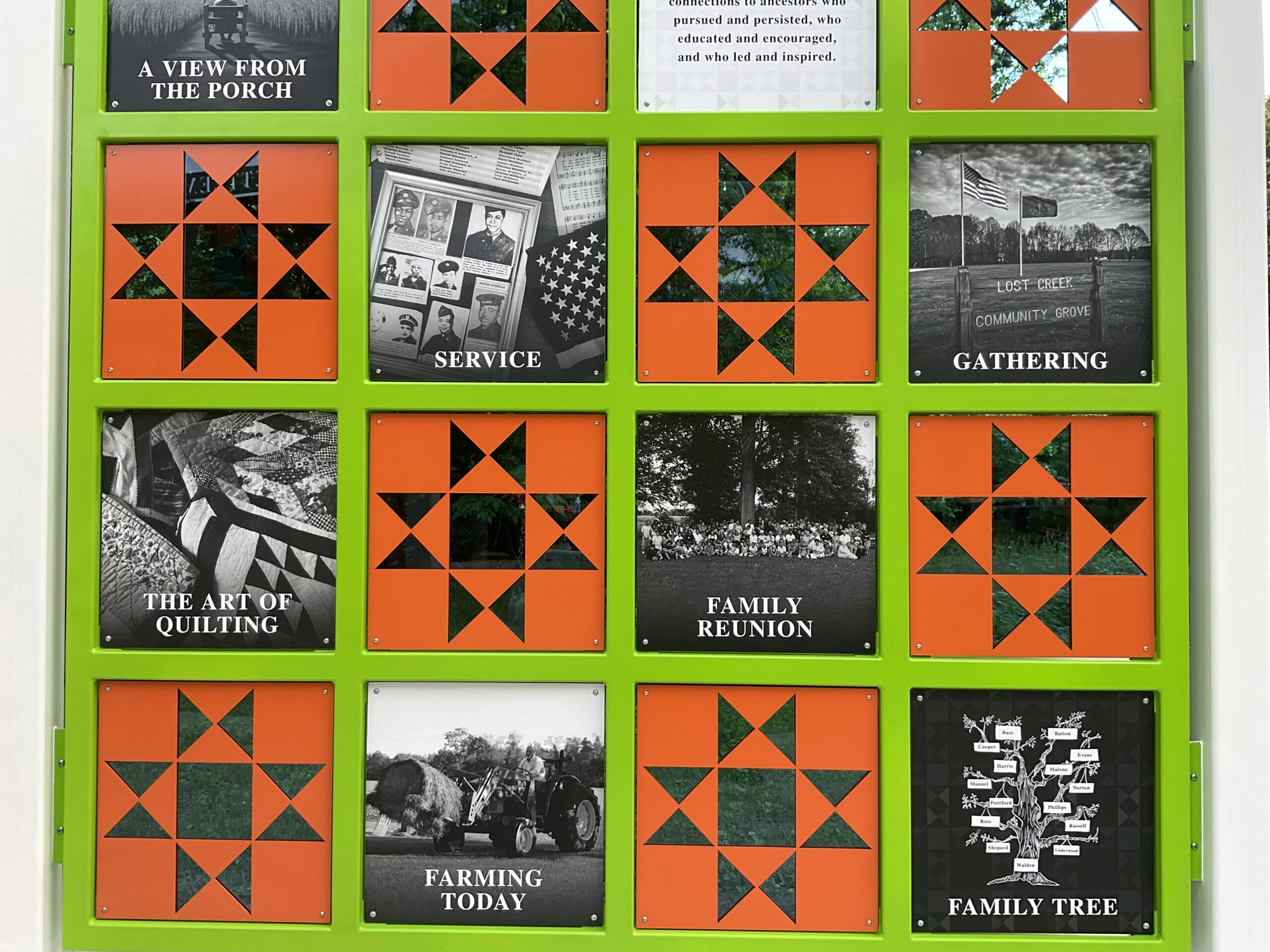
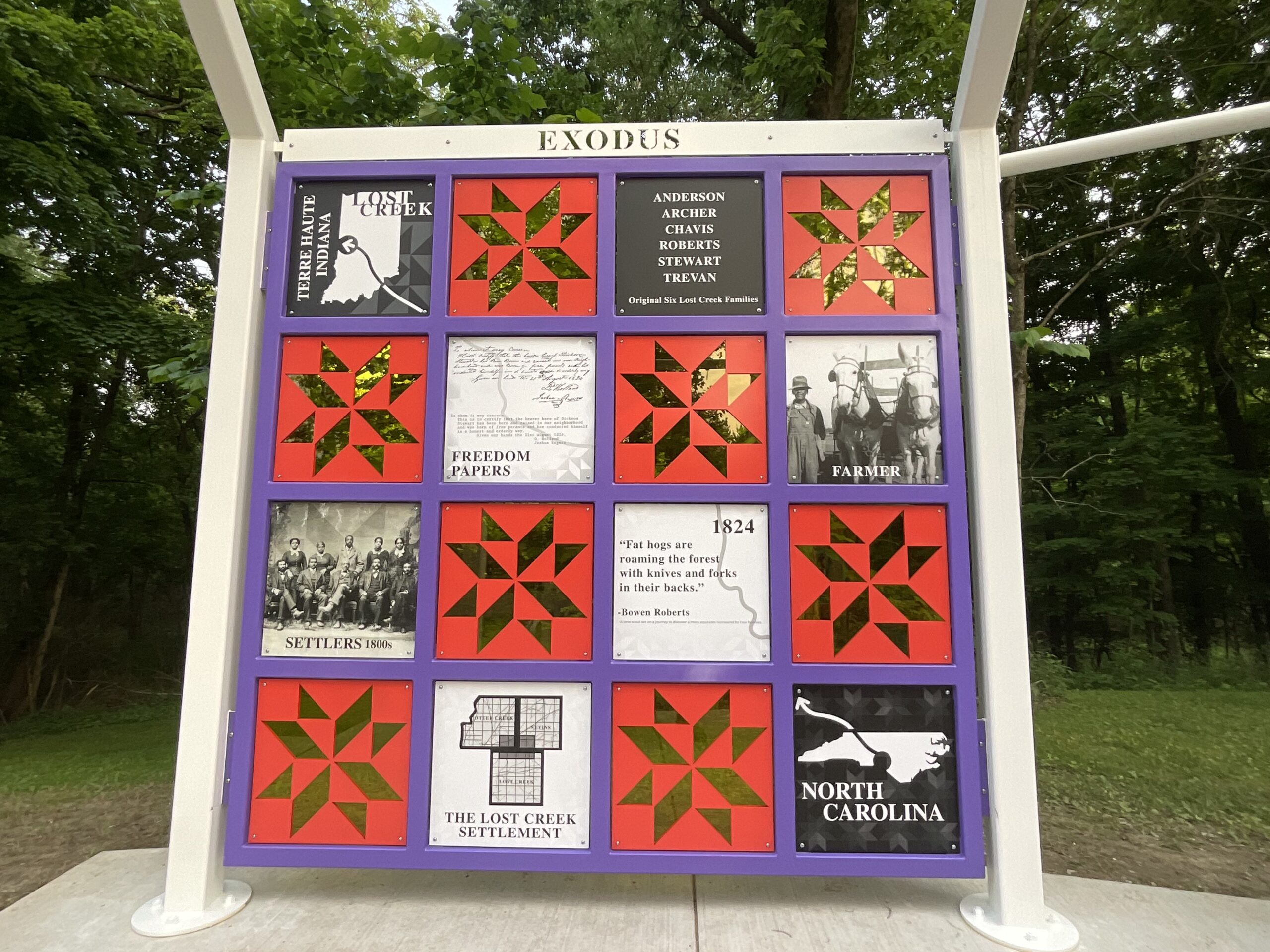
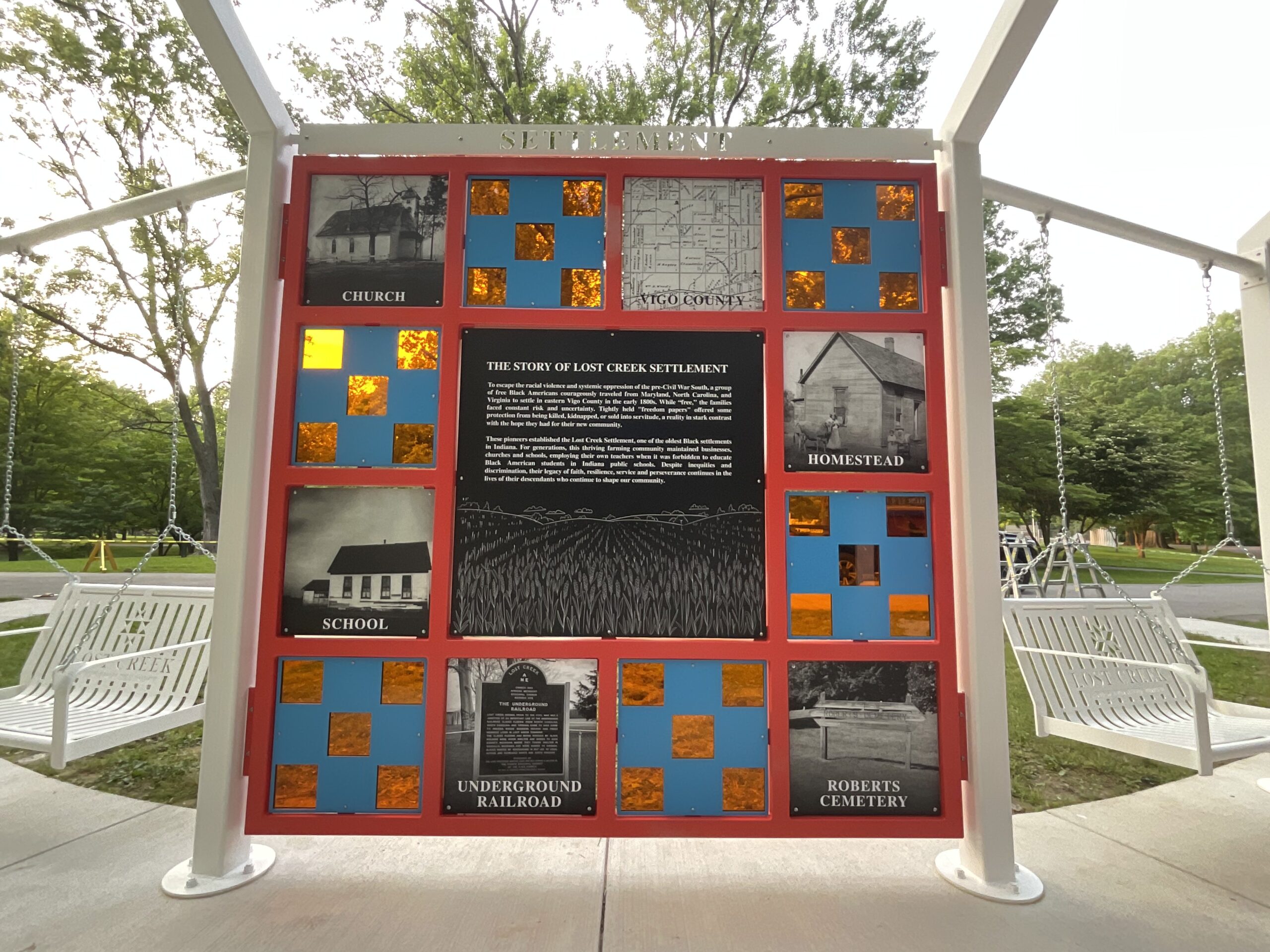
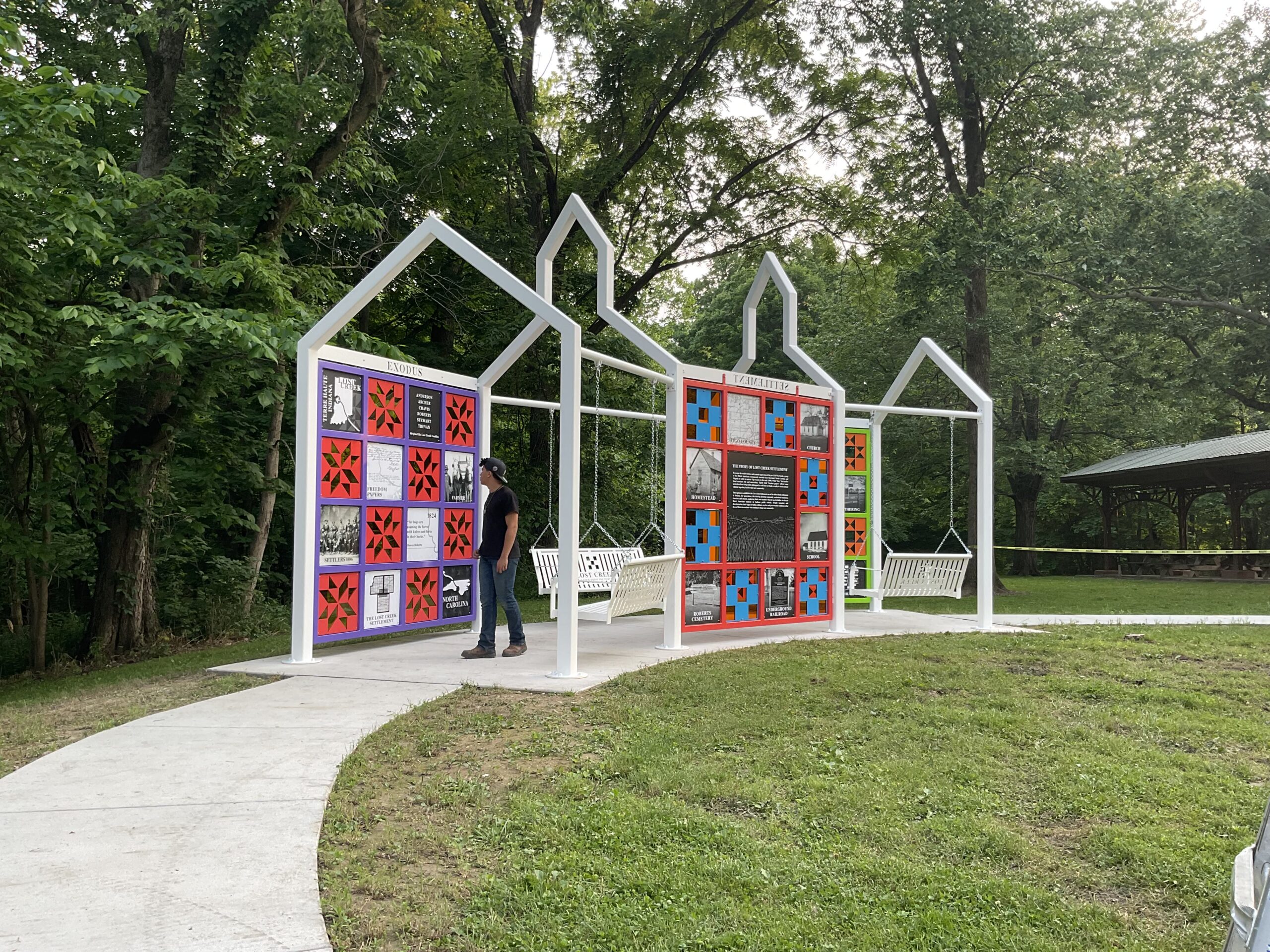
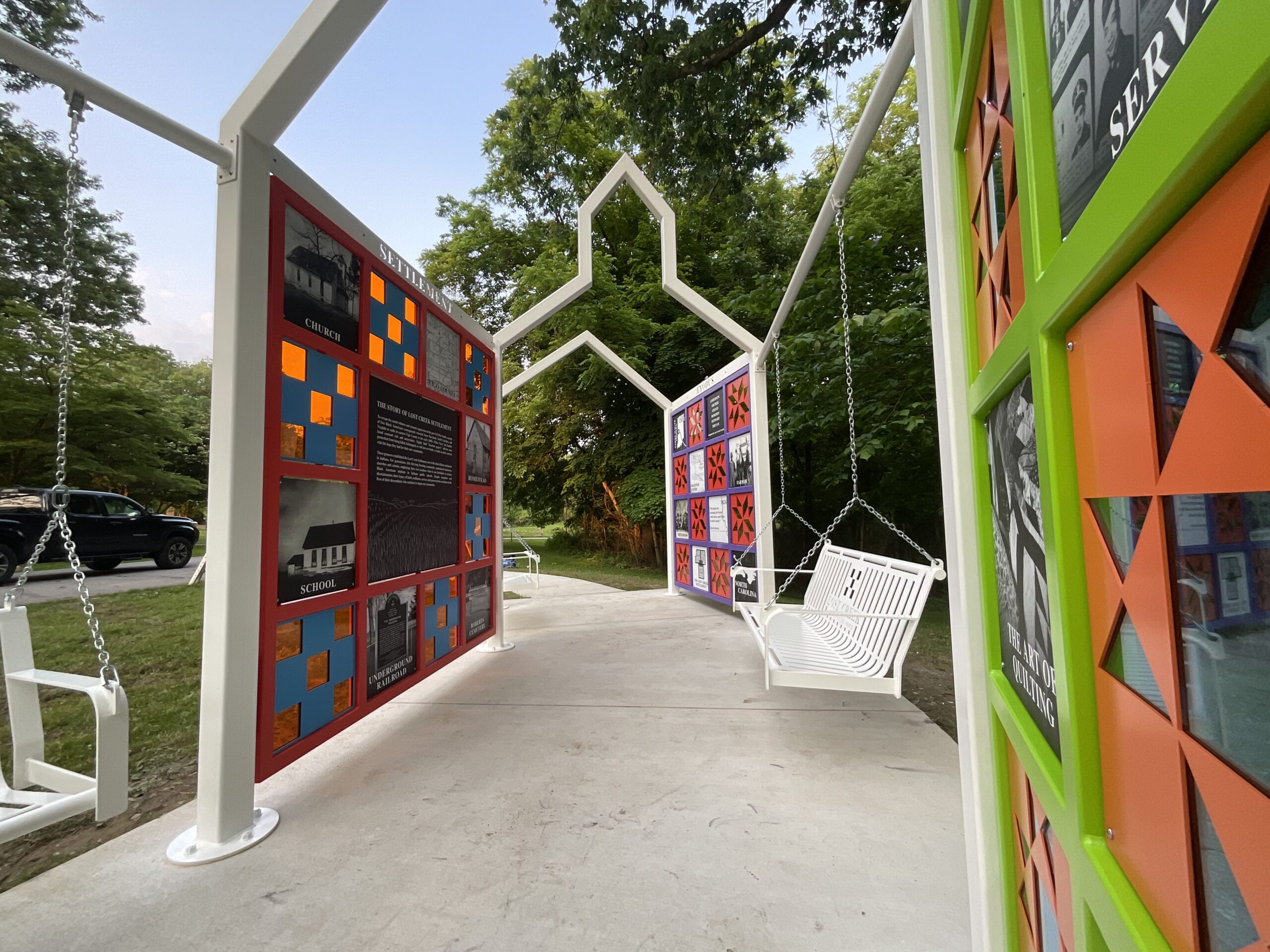
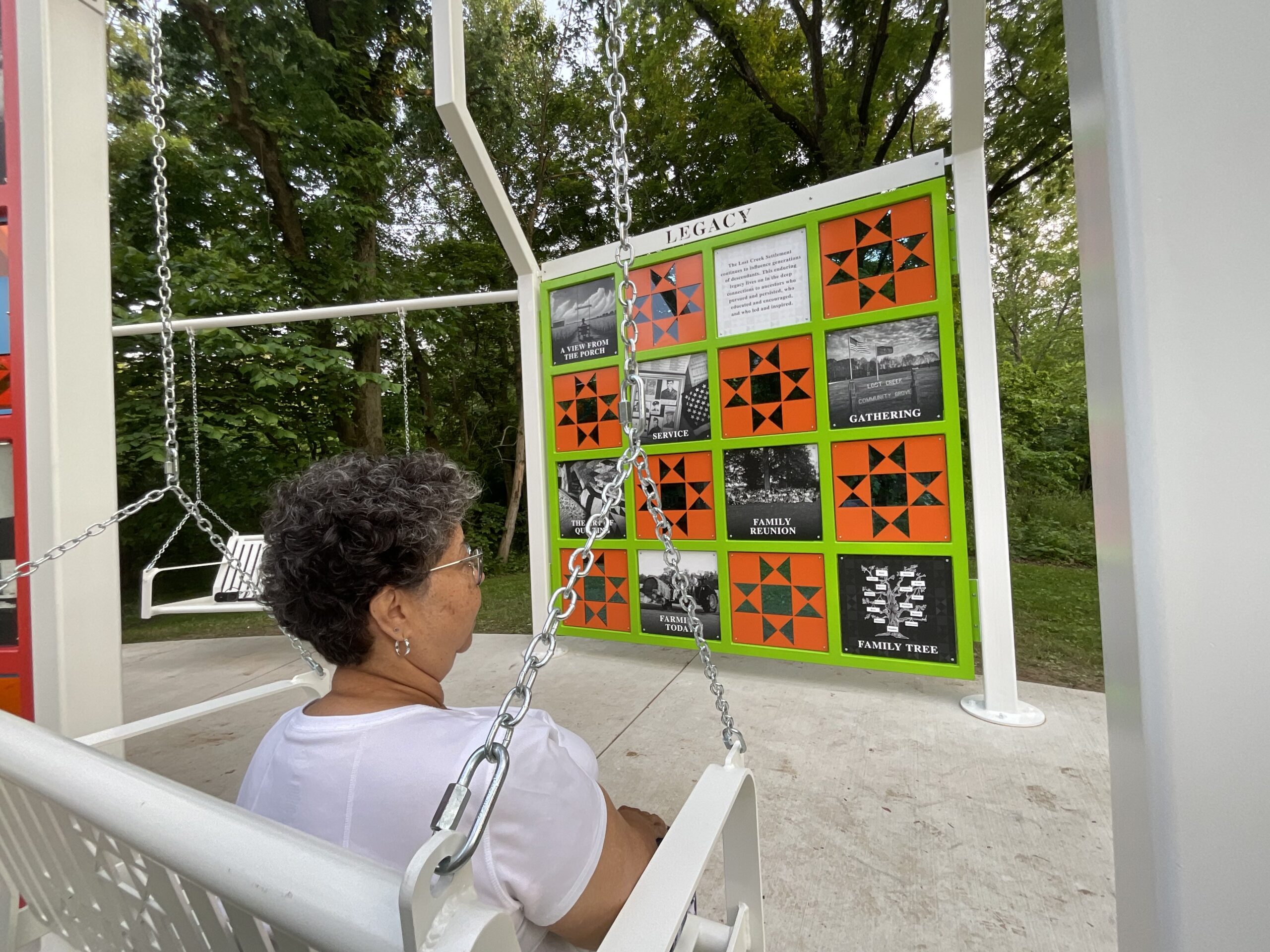
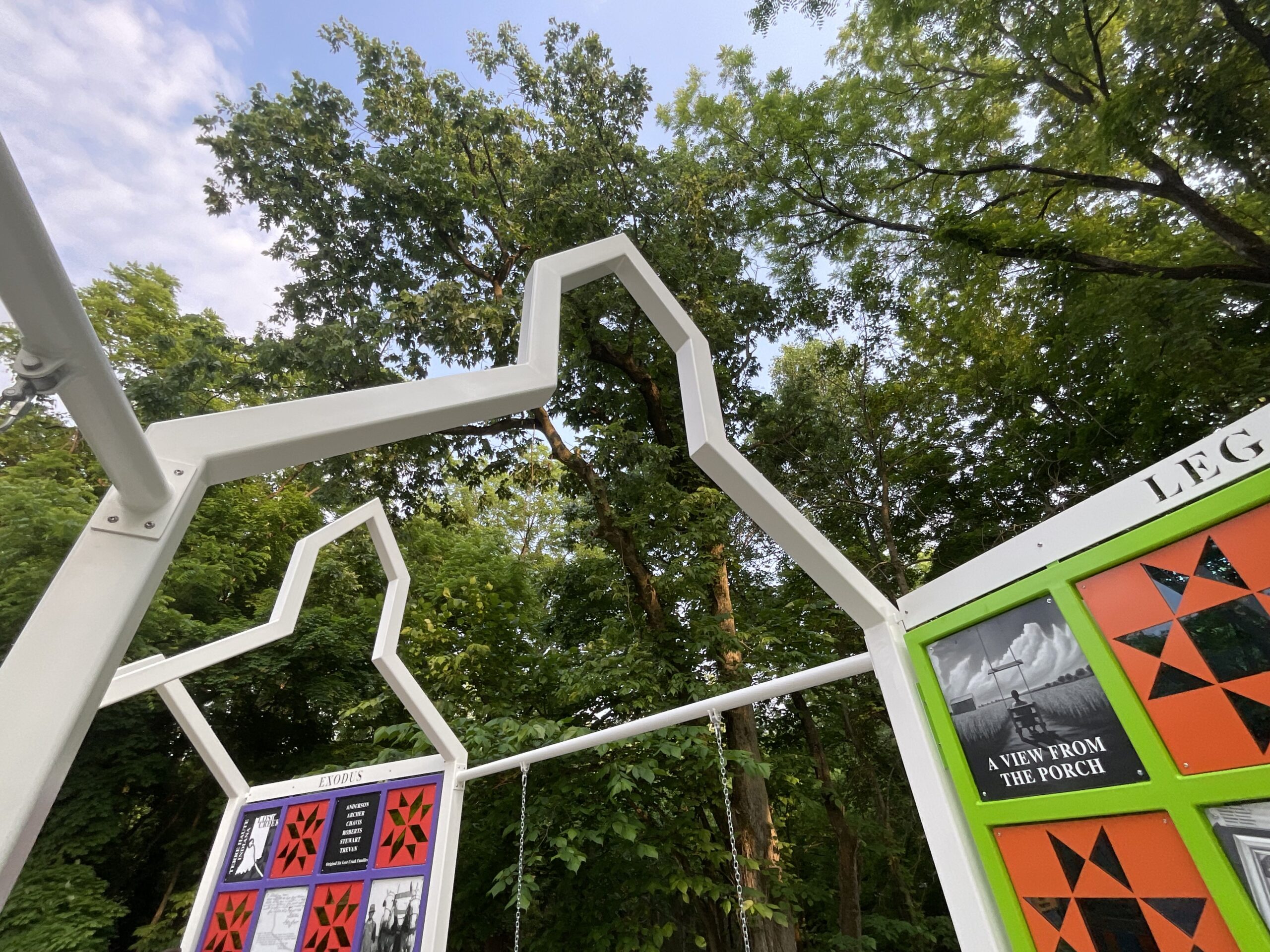
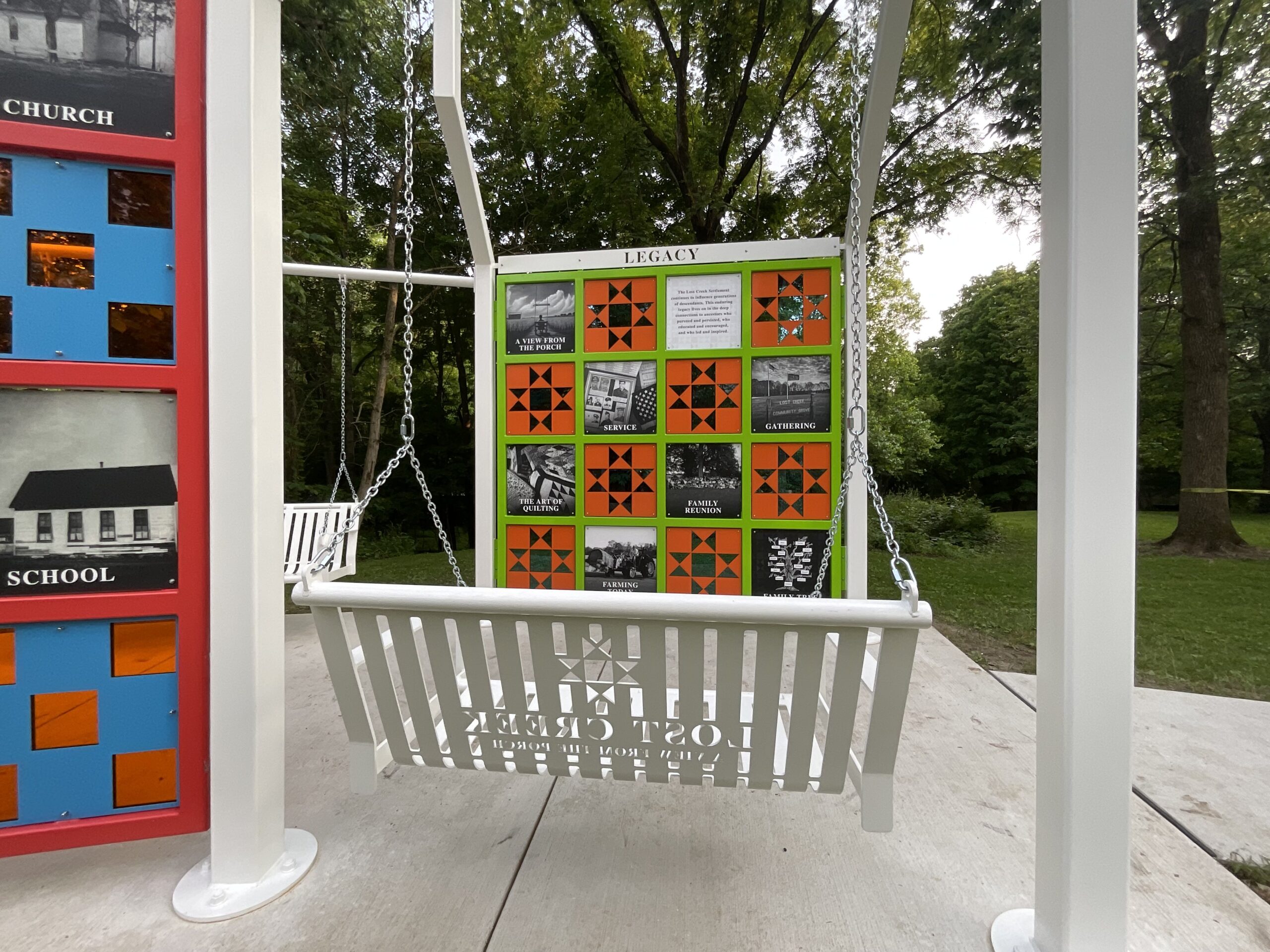
Developed through deep engagement with descendants of the settlement, the work unfolds across three symbolic portals: Exodus, Settlement, and Legacy. Each portal reflects a chapter in the community’s journey—migration, self-reliance, and generational impact. The structure incorporates quilt-inspired patterns, referencing cultural traditions of storytelling and survival.
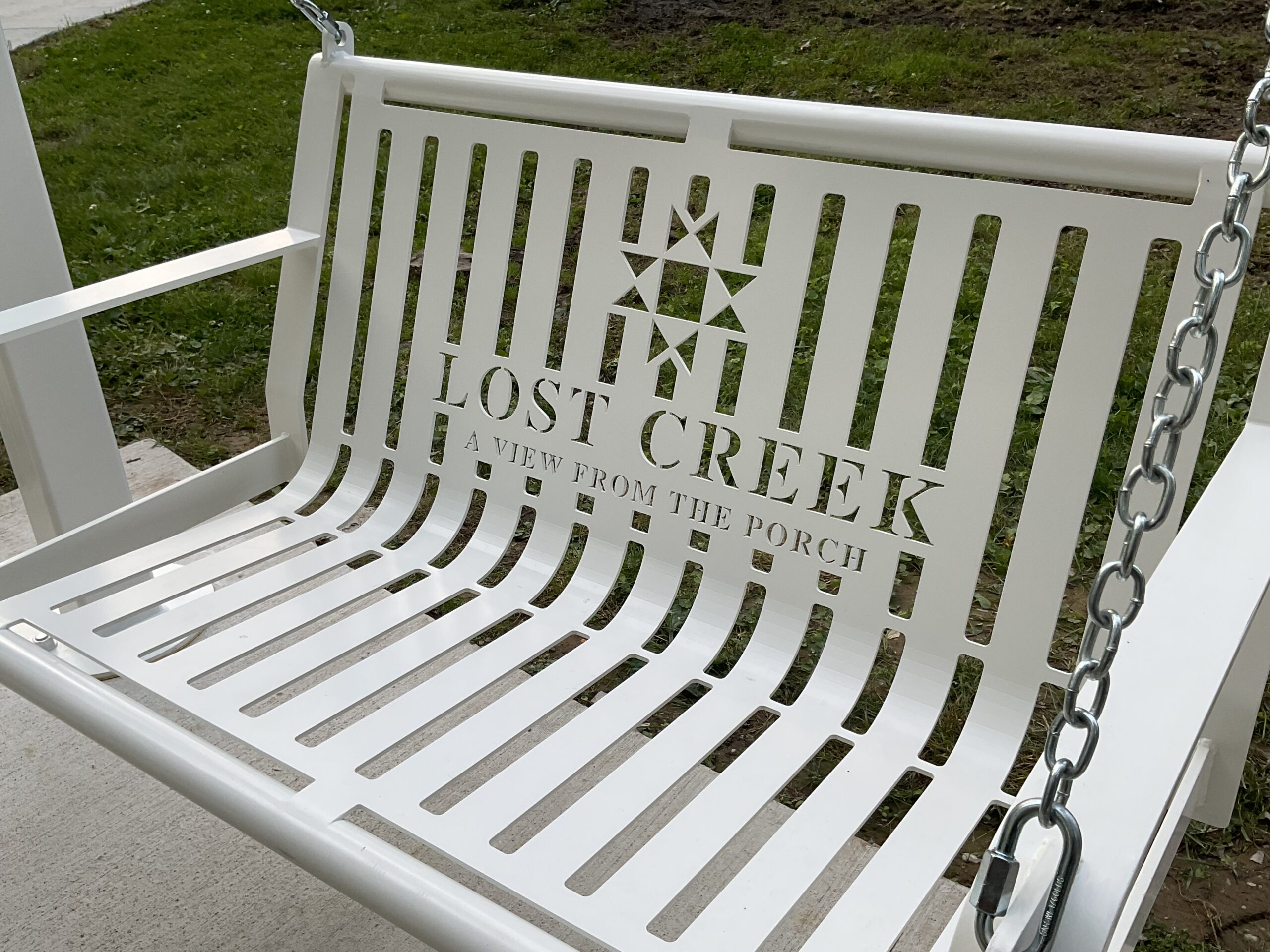
Porch benches at the center of the installation offer spaces for reflection, inviting visitors to sit, to witness, and to absorb this vital chapter of American history—where freedom was fought for, not given, and legacy continues to live.
Details
Title: A View From The Porch, Lost Creek Settlement
Location: Deming Park, Terre Haute, Indiana
Client: City of Terre Haute and Art Spaces
Completed: 2025
Size: 400 ft.²
Medium: Metal, acrylic, and stainless steel
Project Narrative
A View from the Porch stands as a poetic threshold—an open-air portal inviting us to reflect upon the extraordinary legacy of the Lost Creek Settlement. More than an artwork, it is a frame through which history, memory, and place converge.
To escape the racial violence and systemic oppression of the pre–Civil War South, a group of free Black Americans courageously traveled from Maryland, North Carolina, and Virginia to settle in eastern Vigo County in the early 1800s. While “free,” these families lived with constant risk and uncertainty. Tightly held freedom papers offered fragile protection from being killed, kidnapped, or sold into servitude—a reality that stood in stark contrast to the hope they carried for a new beginning.
These pioneers established the Lost Creek Settlement, one of the oldest Black communities in Indiana. Over generations, this self-sustaining farming community built homes, businesses, churches, and schools. When Black children were forbidden from attending public schools, they educated their own—employing Black teachers, fostering learning, and asserting education as a vital form of resistance. Despite deep inequities and discrimination, their legacy of faith, service, and perseverance continues to live on in the descendants who still shape the region today.
From conversations with those descendants, we were reminded:
“They had to build what they couldn’t access.”
“The porch wasn’t just a part of the house—it was the window to the world.”
“Education was survival.”
These reflections helped shape the heart of the artwork.
Composed of three symbolic portals, the piece reflects the journey, resilience, and enduring contributions of this extraordinary community. The first portal, Exodus, captures the courageous migration. Its design draws inspiration from the tradition of quilting—a practice that held deep meaning in Lost Creek. Quilts were more than heirlooms; they were maps, messages, and memory-keepers. Their visual language is etched into the metal skin of the sculpture, preserving stories through pattern.
The second portal, Settlement, speaks to land, labor, and legacy. It honors the act of building—of creating a home, educating children, and cultivating the land with dignity despite exclusion from white institutions. Here, the community’s deep roots are acknowledged and celebrated.
The third portal, Legacy, turns toward the future. It asks the viewer to consider how this story—once overlooked—belongs to all of us. It is not only Black history. It is American history. And it continues to echo through the voices and values of the descendants who walk this land today.
This project was realized through deep engagement and co-creation with members of the Lost Creek community. Their lived stories, photographs, and family lore shaped every decision. We listened. We walked the land together. And we committed to telling a story that, while forged in hardship, radiates pride, beauty, and endurance.
At the heart of the installation are the porch benches, positioned as a place of rest and reflection. They invite visitors to sit, to take in the landscape, and to quietly absorb a story of courage and community that unfolded long before emancipation. Here, history is not only remembered—it is felt.
A View from the Porch is a space of belonging, reverence, and dialogue. It asks us to listen. It asks us to remember. And it offers a place where the weight—and light—of legacy can be seen, honored, and carried forward.